Business learning has a transfer problem. Learners can understand a framework in class, nod through a slide deck, and still struggle when they need to apply that knowledge under pressure. That gap is exactly where serious games earn their place.
Serious games use game mechanics, realistic scenarios, feedback loops, and consequences to teach skills that are hard to build through passive instruction alone. In business education and corporate training, they help learners practice judgment, test assumptions, collaborate with others, and see the impact of decisions over time.
The result is not fun for fun’s sake. The best serious games improve business learning outcomes because they make learners do the work of thinking like managers, marketers, sales leaders, strategists, and innovators before the stakes become real.
What makes a serious game different from ordinary training?
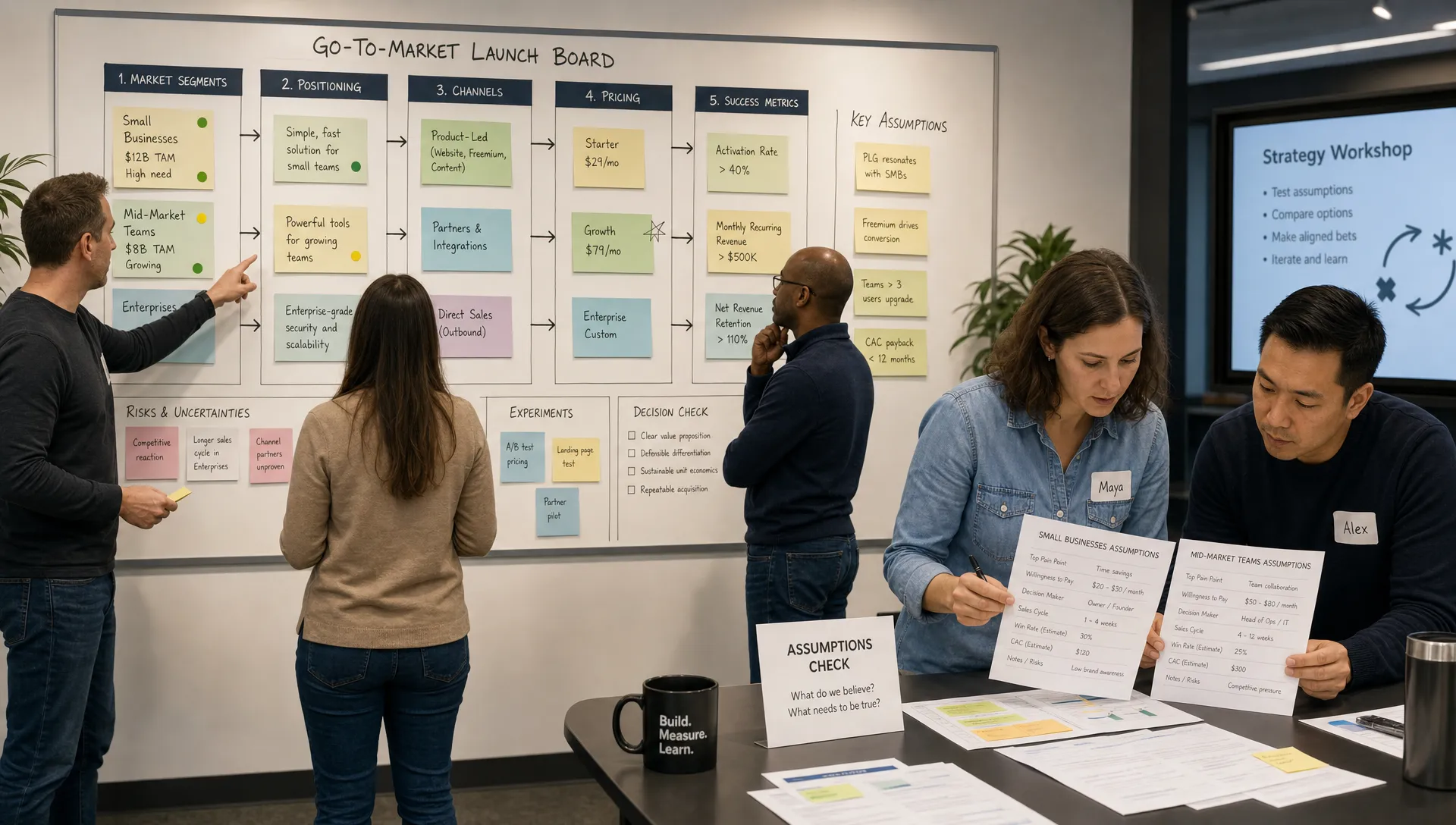
A serious game is designed around a learning objective first. The game layer exists to increase engagement, focus attention, and create meaningful practice. In business contexts, this often means placing learners inside a simulated market, company, negotiation, product launch, or strategic challenge where their decisions affect performance.
That distinction matters. A trivia quiz with points may be gamified, but it is not necessarily a serious game. A strong business simulation, on the other hand, gives learners a dynamic system to manage. They analyze data, make decisions, receive feedback, adapt their strategy, and repeat the cycle.
If you want a broader foundation on the category, this guide to business simulations and how they support experiential learning explains the main types and use cases in more detail.
In practice, serious games work because they combine four forces that traditional training often separates: context, action, feedback, and reflection. Learners are not simply told what good decision-making looks like. They experience it, including the tradeoffs, uncertainty, and consequences.
Why serious games improve business learning outcomes
They turn abstract concepts into applied decisions
Business concepts can feel deceptively simple when presented in isolation. Market segmentation, pricing, brand positioning, customer lifetime value, channel strategy, negotiation leverage, and innovation portfolio management all make sense on a slide. The difficulty appears when learners must prioritize, compromise, and act with incomplete information.
Serious games close that gap by requiring learners to make choices. Instead of discussing a pricing strategy in theory, a learner may need to set a price, allocate budget, respond to competitors, and defend the logic to a team. Instead of memorizing a sales process, they may need to navigate a negotiation where the buyer’s needs, objections, and constraints evolve.
That is where learning becomes durable. When learners must apply a concept, they expose what they truly understand and what they have only recognized superficially. This is especially valuable in business education, where success depends less on recalling definitions and more on making sound decisions in ambiguous situations.
They create feedback loops that accelerate improvement
Feedback is one of the biggest advantages of serious games. In a lecture, feedback may arrive as a grade days or weeks later. In a simulation, learners can often see the effects of their decisions much faster. Did their market share improve? Did customer satisfaction decline? Did a negotiation produce a strong agreement or damage the relationship? Did a strategy maximize short-term results while weakening long-term positioning?
A meta-analysis by Traci Sitzmann published in Personnel Psychology found that, compared with comparison groups, simulation game trainees showed higher self-efficacy, declarative knowledge, procedural knowledge, and retention, especially when the games were actively integrated with other instructional methods. The research is a useful reminder that the game itself is not magic. The learning comes from the cycle of action, feedback, explanation, and revision.
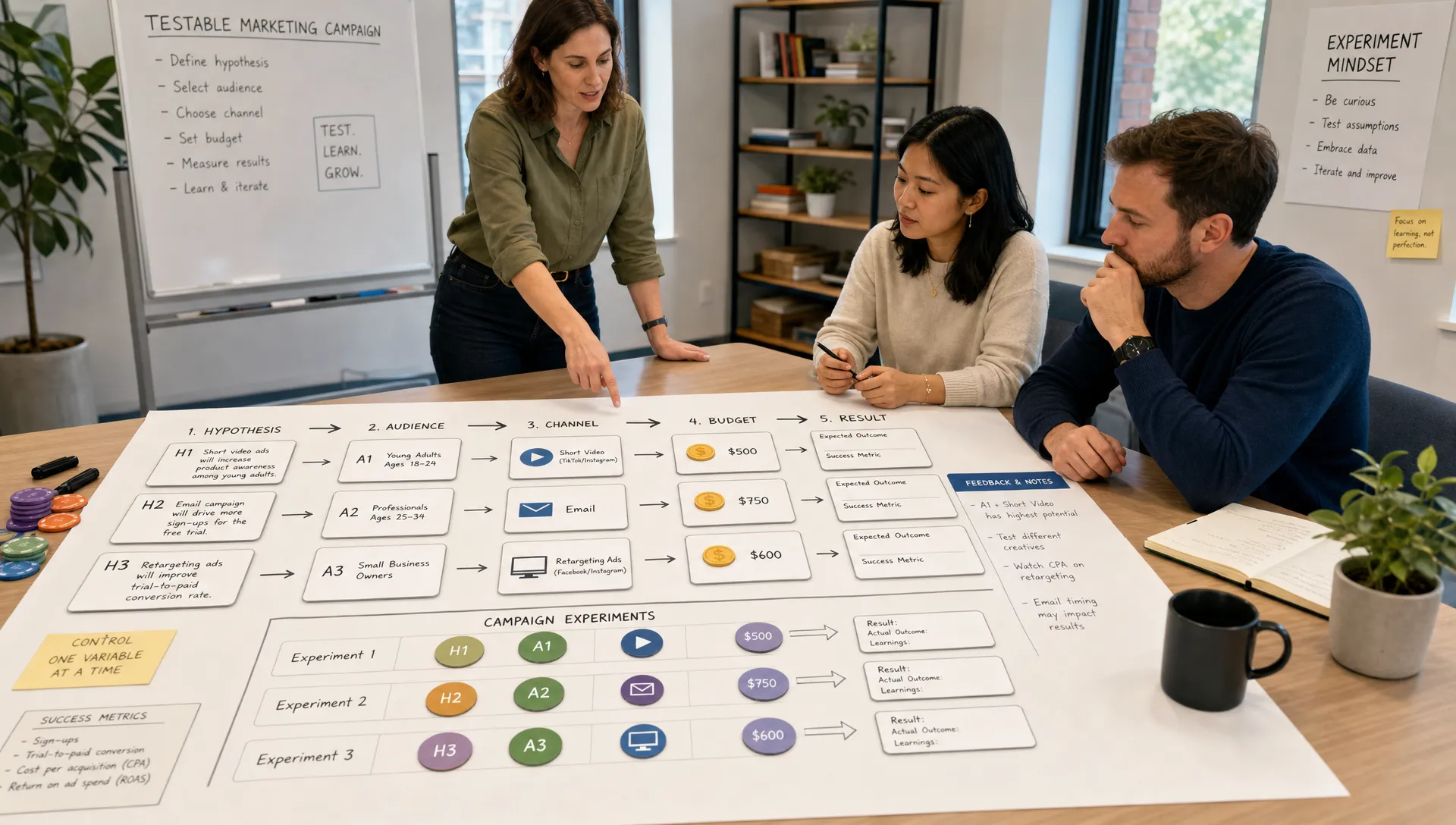
This feedback loop is powerful because it gives learners a safe way to recalibrate. They can test a hypothesis, see what happened, discuss why, and try again. Over several rounds, they begin to develop the pattern recognition that business professionals rely on in the real world.
They make failure productive instead of costly
In real business environments, poor decisions can cost revenue, customer trust, morale, or strategic momentum. In a serious game, failure becomes a learning asset. Learners can take risks, make mistakes, and analyze consequences without harming a real company or client.
This changes the emotional tone of learning. Instead of avoiding failure, learners become more willing to explore. They can compare aggressive and conservative strategies, test different market assumptions, or discover why a plan that looked strong at first created unintended consequences later.
For corporate teams, this is particularly valuable. Employees often know the official process, but they may not have practiced what to do when conditions shift. Serious games let them rehearse those moments before they encounter them on the job.
They build systems thinking
Business outcomes rarely come from one decision. They emerge from connected choices across functions, time horizons, and stakeholders. A marketing campaign affects sales forecasts. A pricing move changes demand and brand perception. A supply constraint affects customer experience. A sustainability choice may influence cost, reputation, and long-term risk.
Serious games are well suited to this complexity because they show how decisions interact. Learners can see that optimizing one metric may damage another. They also learn that good strategy requires sequencing, alignment, and adaptation.
This systems perspective is increasingly important in 2026, as business problems are shaped by digital transformation, AI, regulation, fraud risk, and data quality. For example, in a finance, risk, or operations scenario, learners might explore how controls, human judgment, and tools such as AI-powered invoice and receipt fraud detection fit into a broader decision system. The lesson is not simply to use technology. It is to understand how technology, process, incentives, and accountability interact.

They strengthen collaboration and communication
Business decisions are rarely made alone. Serious games encourage learners to explain their reasoning, challenge assumptions, persuade teammates, and negotiate tradeoffs. In many learning environments, this social dimension is just as important as the analytical one.
A team may disagree about whether to invest in innovation, defend margin, enter a new segment, or change sales priorities. Those disagreements create rich learning moments. Participants must make their thinking visible, use evidence, and align on a shared plan.
This is one reason simulations are valuable for both academic cohorts and corporate teams. They reveal how people collaborate under uncertainty, not just what they know individually. For a related perspective, StratX has also covered why simulations can move learning from training to competitive advantage by helping people practice new behaviors.
From engagement to measurable outcomes
Engagement matters, but it is not the final goal. The real value of serious games is their ability to improve outcomes that educators, trainers, and business leaders can observe.
| Learning outcome | How serious games support it | What to look for |
|---|---|---|
| Knowledge retention | Learners repeatedly apply concepts in context | Better recall during debriefs, assessments, and later modules |
| Decision-making | Participants weigh tradeoffs and act with incomplete information | More evidence-based recommendations and clearer prioritization |
| Strategic thinking | Learners see how choices interact over time | Improved ability to connect short-term actions with long-term goals |
| Collaboration | Teams must align, debate, and commit to decisions | Stronger communication, role clarity, and constructive challenge |
| Confidence | Learners practice before facing real-world stakes | Greater willingness to make and defend decisions |
| Behavior change | Scenarios mirror workplace challenges | More transfer from the learning environment to the job |
The key is to define outcomes before choosing or designing the serious game. A simulation for brand management should not be evaluated only by whether learners enjoyed it. It should be evaluated by whether they improved their ability to read market data, position a product, allocate resources, and adapt to competitor moves.
What makes a serious game effective?
Not every game improves learning. A serious game needs instructional design, facilitation, and reflection to deliver business value.
First, the scenario must be realistic enough to feel relevant. Learners do not need a perfect replica of their industry, but they do need credible constraints, recognizable decisions, and meaningful consequences. If the scenario feels arbitrary, the learning will feel arbitrary too.
Second, the rules must be clear without removing complexity. Learners should understand how to participate, what information they have, and what decisions are required. At the same time, the game should preserve enough uncertainty to resemble real business conditions.
Third, feedback must be interpretable. If learners receive a result but cannot understand what drove it, the experience becomes frustrating. Effective simulations help participants connect decisions to outcomes, then use debriefing to deepen that analysis.
Fourth, the facilitator plays a central role. The best learning often happens after a round of play, when participants compare strategies, surface assumptions, and discuss what they would do differently. Serious games should not replace instructors or trainers. They give instructors and trainers richer material to work with.
Finally, the experience should fit the learning journey. A simulation can introduce a topic, reinforce a module, serve as a capstone, or support executive development. The right placement depends on the audience, time available, and desired outcomes. If you are planning implementation, StratX’s practical guide to adding simulations into learning programs offers useful considerations for structuring the experience.
How to measure whether serious games are working
To improve business learning outcomes, serious games should be measured beyond attendance and satisfaction scores. Learner enjoyment is useful, but it is only one signal.
A stronger evaluation plan may include:
- Pre- and post-assessments that test applied knowledge, not just definitions
- Team decision reviews that examine the quality of reasoning and use of data
- Reflection prompts that ask learners to explain what changed in their thinking
- Performance metrics from the simulation, such as profitability, market share, customer outcomes, or negotiation value
- Follow-up surveys or manager observations that check whether behaviors changed after the program
For academic settings, this evidence can support grading, accreditation goals, and curriculum improvement. For corporate training, it can help L&D leaders demonstrate whether the experience contributed to better skills, stronger alignment, or improved readiness.
The most useful measurement combines quantitative and qualitative evidence. A team’s final score matters, but so does how they got there. Did they adapt when the market changed? Did they learn from weak results? Did they collaborate effectively? Did they understand the strategic implications of their choices?
Common mistakes to avoid
The first mistake is treating serious games as entertainment rather than learning design. If the experience is exciting but disconnected from objectives, it will not produce lasting value.
The second mistake is skipping the debrief. Learners need time to interpret what happened, connect outcomes to concepts, and generalize lessons to real business situations. Without reflection, the game may be memorable but shallow.
The third mistake is choosing a game that is too simple or too complex for the audience. If it is too simple, learners disengage because the challenge feels artificial. If it is too complex, they focus on mechanics rather than learning. The best choice creates productive struggle.
The fourth mistake is measuring only who won. Competitive energy can be motivating, but winning is not always the same as learning. A team that finishes lower in the ranking may still have developed excellent insight if they can explain their mistakes and improve their strategy.
Frequently Asked Questions
What are serious games in business learning? Serious games are structured learning experiences that use game mechanics, realistic scenarios, decisions, feedback, and consequences to teach business skills. In business education and training, they often take the form of simulations where learners manage markets, teams, strategies, negotiations, or innovation challenges.
How do serious games improve learning outcomes? They improve outcomes by requiring active decision-making, creating fast feedback loops, encouraging reflection, and helping learners practice in realistic but low-risk environments. This supports retention, confidence, collaboration, and transfer to real business situations.
Are serious games only useful for students? No. They are useful in academic and corporate settings. Students can use them to connect theory with practice, while professionals can use them to rehearse strategic decisions, improve teamwork, and build job-relevant skills.
Do serious games replace instructors or trainers? No. They are most effective when facilitated well. Instructors and trainers help learners interpret results, connect the experience to core concepts, and apply lessons beyond the simulation.
What should organizations measure after using serious games? Useful measures include applied knowledge, decision quality, collaboration, simulation performance, learner reflection, confidence, and post-program behavior change. The best evaluation plans connect the game directly to the learning objectives.
Make business learning more experiential
Serious games improve business learning outcomes because they give learners what passive formats often cannot: practice, consequences, feedback, and reflection. They help people move from knowing the language of business to making better business decisions.
StratX Simulations provides experiential business simulation software for marketing, strategy, sales, and innovation programs in both academic and corporate formats. If you want learners to engage more deeply and retain what they learn, explore how StratX Simulations can support your next learning experience.