Turn Circular Economy Principles into Real Business Decisions.
Participants manage two consumer electronics brands across five simulated years. They develop products, target customer segments, invest in circular initiatives and compete for market leadership while balancing profitability with environmental impact.
2–3 hour experience
Five decision rounds
Individual or team-based
Compete against AI-managed companies
Online, classroom or blended delivery
Higher education and corporate training
Building a more sustainable business requires trade-offs.
Every circular initiative requires investment. Customer segments value sustainability differently. Products must remain competitive, and companies still need to generate profitable growth.
CircularPRO places participants inside these tensions. They must decide which initiatives to prioritize, which consumers to target and how quickly their company can move towards a more circular business model.
Participants cannot succeed by pursuing financial performance or environmental impact in isolation. They must build a strategy that connects both.
Building a more sustainable business requires trade-offs.
Every circular initiative requires investment. Customer segments value sustainability differently. Products must remain competitive, and companies still need to generate profitable growth.
CircularPRO places participants inside these tensions. They must decide which initiatives to prioritize, which consumers to target and how quickly their company can move towards a more circular business model.
Participants cannot succeed by pursuing financial performance or environmental impact in isolation. They must build a strategy that connects both.

How Does CircularPRO Work?
Take control of two brands
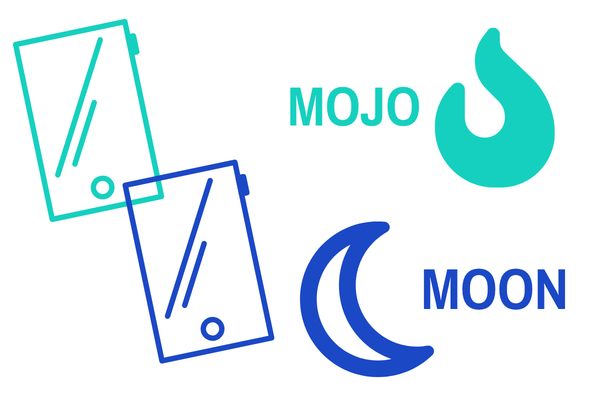
Participants become the marketing team of an electronics company responsible for the MOJO and MOON brands.
Understand the market
Analyze three customer segments, their changing expectations and the competitive position of each brand.
Make strategic decisions
Develop product features, set prices, allocate marketing resources and invest in circular company initiatives.
Run the market
Compete against AI-managed companies and see how customers respond to the strategy.
Measure the results
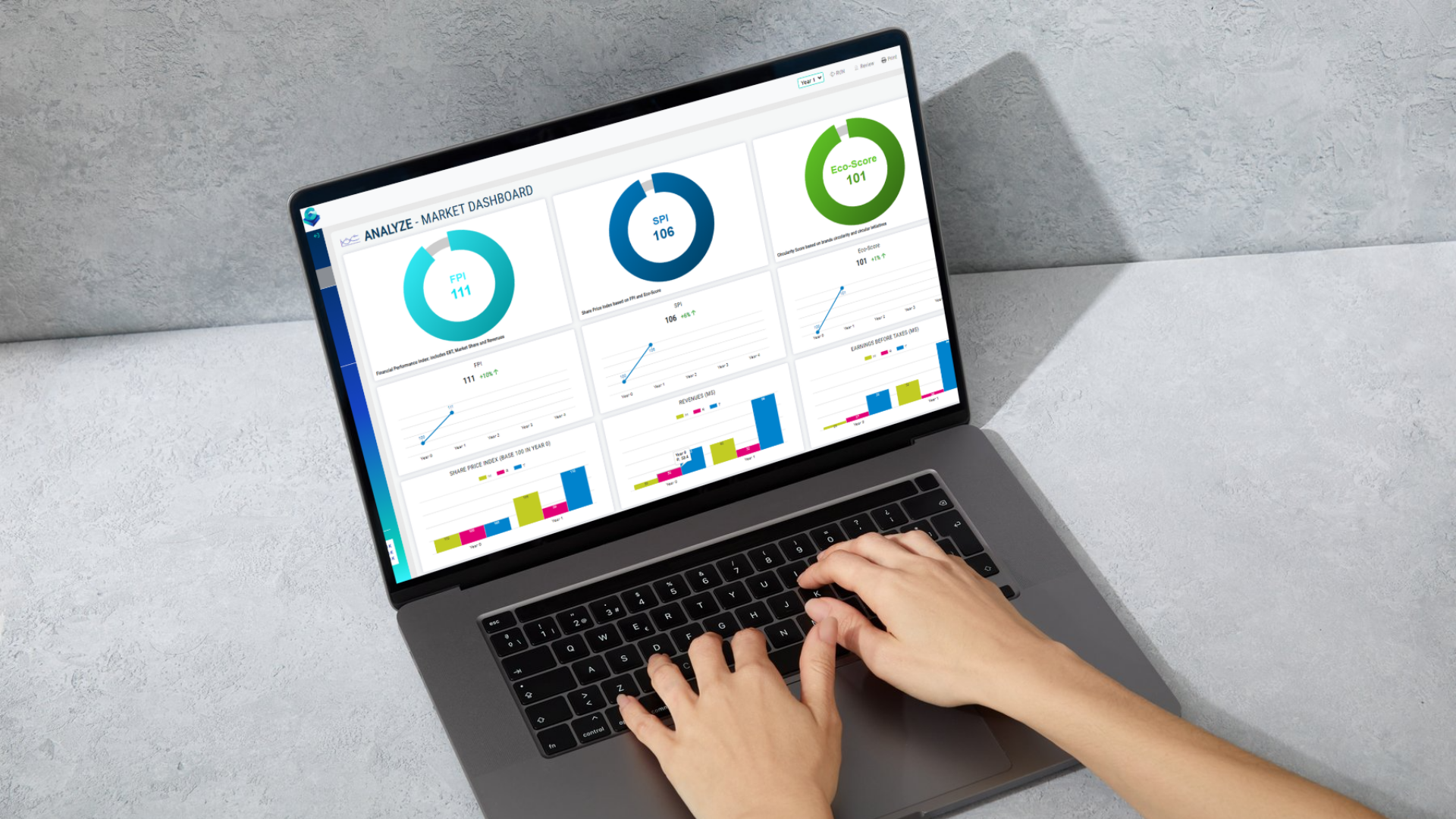
Review financial performance, market results, Eco-Score and overall Share Price Index.
Adapt over five years
Use each year’s results to improve products, refine targeting and decide which sustainability investments to make next.
MEASURABLE PERFORMANCE
Success Means Balancing Profitability and Sustainability
Financial Price Index
Reflects the company’s commercial and financial performance, including its ability to generate revenue and profit.
Eco-Score
Measures the sustainability characteristics of the brands and the company’s progress through circular initiatives.
Share Price Index
The overall performance indicator reflects both financial results and environmental performance.
Learning Outcomes
Build a sustainable marketing strategy
Connect circular economy priorities with customer needs, competitive positioning and long-term growth.
Design more circular products
Explore decisions involving product features, recycled materials, reparability and carbon footprint.
Understand different customer attitudes
Recognize that customer segments do not value sustainability in the same way and adapt the offer accordingly.
Balance impact with profitability
Decide when and where to invest while maintaining the financial health of the company.
Communicate sustainability credibly
Align marketing claims with real product characteristics and company initiatives to reduce greenwashing risk.
Think beyond one decision
Experience how product, marketing and circularity decisions interact over five simulated years.
THE BUSINESS CHALLENGE
Lead Two Brands in an Eco-Sensitive Electronics Market
Participants manage the marketing division of a fictitious consumer electronics company.
Across five years, they are responsible for two competing brands in a market where customers care about price, performance and environmental impact in different ways.
Their decisions include:
- Selecting target customer segments
- Developing and improving products
- Setting brand prices
- Allocating marketing resources
- Reducing product and company carbon footprints
- Investing in circular initiatives
- Responding to changing customer expectations
- Tracking competitor performance
- Deciding how quickly to transition towards circularity
Key concepts
Sustainable marketing strategy
Segmentation & positioning in a digital & eco-sensitive market
Brand portfolio management
Put into practice
Design eco-friendly products & business processes
Reduce a business's carbon footprint
Comprehend and avoid greenwashing practices
Target eco-conscious consumer segments
Adopt digital transformation for environmental good
Discover how sustainability & profitability can be synergistic
Who is CircularPRO for?
Sustainability Training for Business and Education
Corporate Training
CircularPRO gives marketing, sustainability and innovation teams a shared experience through which to explore circular business decisions.
It can support:
- Sustainability training
- Marketing capability programs
- Innovation workshops
- Cross-functional collaboration
- Leadership development
- Team events and internal challenges
Organizational benefits:
- Create a shared language around circularity
- Connect sustainability with customer and commercial priorities
- Improve cross-functional decision-making
- Surface assumptions and competing priorities
- Turn abstract commitments into practical trade-offs
- Stimulate discussion around greenwashing and credible action
Higher education and executive education
CircularPRO helps students and executive participants apply circular economy and sustainable marketing concepts in a realistic competitive environment.
It fits naturally within:
- Circular economy courses
- Sustainable marketing
- Sustainability and business strategy
- Brand management
- Innovation and product strategy
- Responsible management
- MBA and executive education programs
Benefits for participants:
- Apply sustainability frameworks through decisions
- Understand the commercial realities of circularity
- Develop strategic and analytical thinking
- Experience the consequences of green marketing decisions
- Learn to balance impact, customer value and profitability
- Strengthen teamwork and communication
Which Circular Economy Simulation Is Right for You?
| CircularPRO | Circular Markstrat | |
|---|---|---|
| Experience | Focused circular economy simulation | In-depth strategic marketing simulation |
| Typical duration | 2–3 hours | Multi-session experience |
| Structure | Five decision rounds | Longer competitive journey |
| Competition | Participants versus AI companies | Team versus team or AI |
| Main focus | Sustainable marketing and circular business trade-offs | Marketing, digital strategy and circularity |
| Best suited to | One class, workshop or focused module | Advanced courses and longer programs |
CircularPRO FAQs
What is CircularPRO?
CircularPRO is a browser-based circular economy business simulation from StratX Simulations. Participants manage two consumer electronics brands and make marketing, product and sustainability decisions across five simulated years.
How does the CircularPRO simulation work?
Participants analyze an eco-sensitive consumer market, select target segments and manage two brands. They make decisions about products, pricing, marketing and circular initiatives, then review how those decisions affect financial performance, environmental impact and overall company value.
What circular economy concepts does CircularPRO teach?
CircularPRO explores circular product design, recycled materials, reparability, carbon reduction, sustainable marketing, customer attitudes towards sustainability and the relationship between environmental impact and profitability.
What decisions do participants make?
Participants make decisions involving product development, pricing, customer targeting, marketing investment, carbon footprint reduction and circular company initiatives. They must prioritize investments because not every improvement can be implemented immediately.
How long does CircularPRO take?
CircularPRO normally takes between two and three hours. It can be completed in one workshop or divided across several shorter sessions.
How many rounds are included?
CircularPRO contains five decision rounds, representing five years of business activity. Participants use the results of each year to refine their strategy for the next.
How do I get started with CircularPRO?
Request a demo and tell us about your audience, learning objectives and delivery format. The StratX team will show you the simulation and help you plan its integration into your course or training program.
Who is CircularPRO designed for?
CircularPRO is suitable for undergraduate, graduate, MBA and executive education participants. It can also be used in corporate training for marketing, sustainability, innovation and cross-functional teams.
Can CircularPRO be used in corporate sustainability training?
Yes. CircularPRO can support sustainability training, marketing development, innovation workshops, leadership programs and team events. It helps participants connect environmental goals with commercial and customer priorities.
Can participants play individually or in teams?
CircularPRO can be played individually or in teams. Team-based delivery encourages discussion and collaboration, while individual play is suitable for assessment and asynchronous learning.
How is performance measured?
Performance is measured through the Share Price Index. This reflects both the company’s Financial Price Index and its Eco-Score, encouraging participants to balance commercial performance with environmental progress.
What is the difference between CircularPRO and Circular Markstrat?
CircularPRO is a focused two-to-three-hour experience designed for a class, workshop or short module. Circular Markstrat is a more extensive, multi-session simulation covering marketing, digital strategy and circular economy decisions in greater depth.
Can CircularPRO be delivered online?
Yes. CircularPRO is browser-based and can be delivered online, in person or through a blended format. Participants can stop and resume their progress when required. .
What support do instructors and facilitators receive?
StratX provides onboarding, course setup guidance, supporting materials and technical assistance. The team can also help determine the most suitable delivery format for the audience and learning objectives.