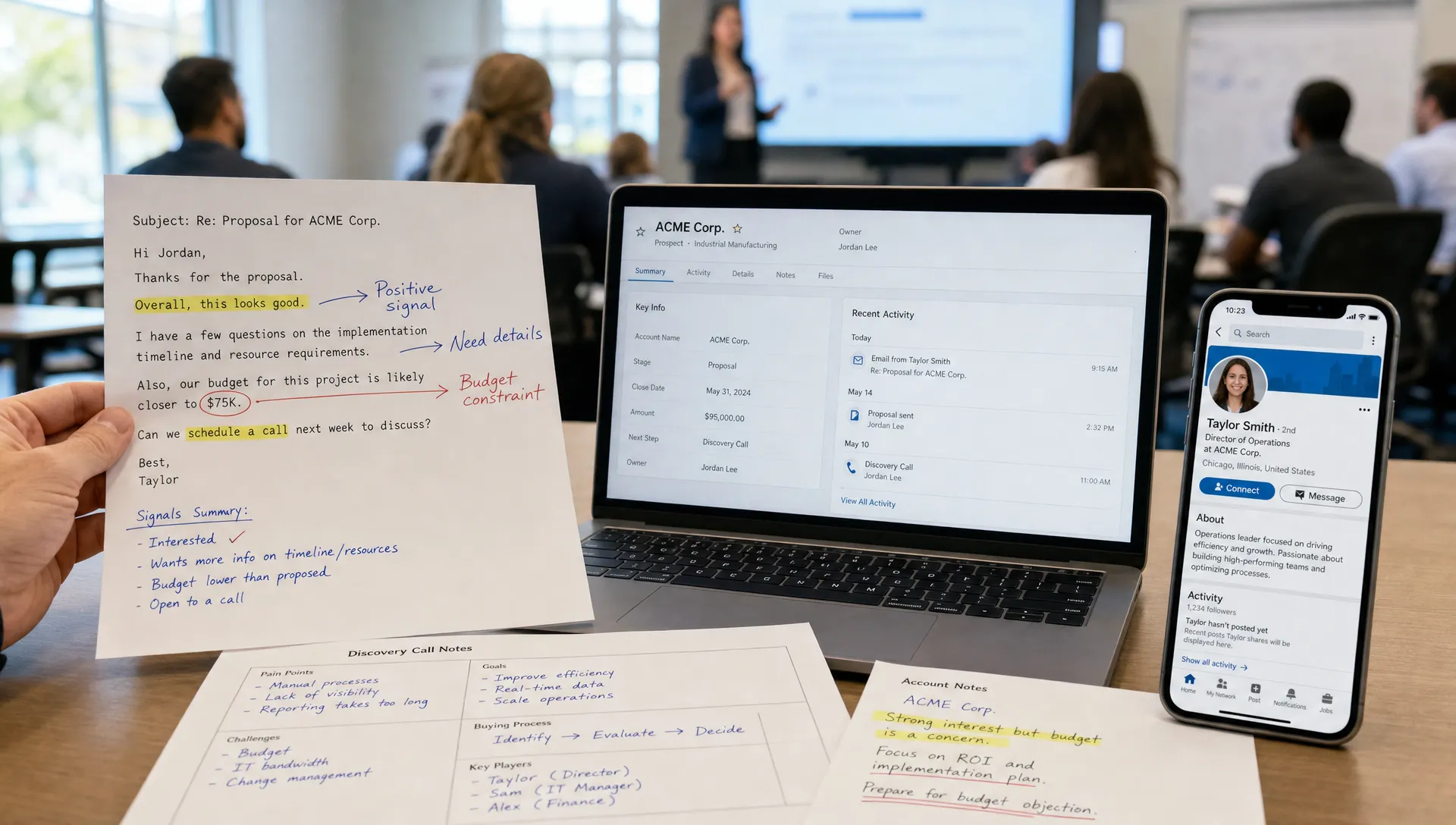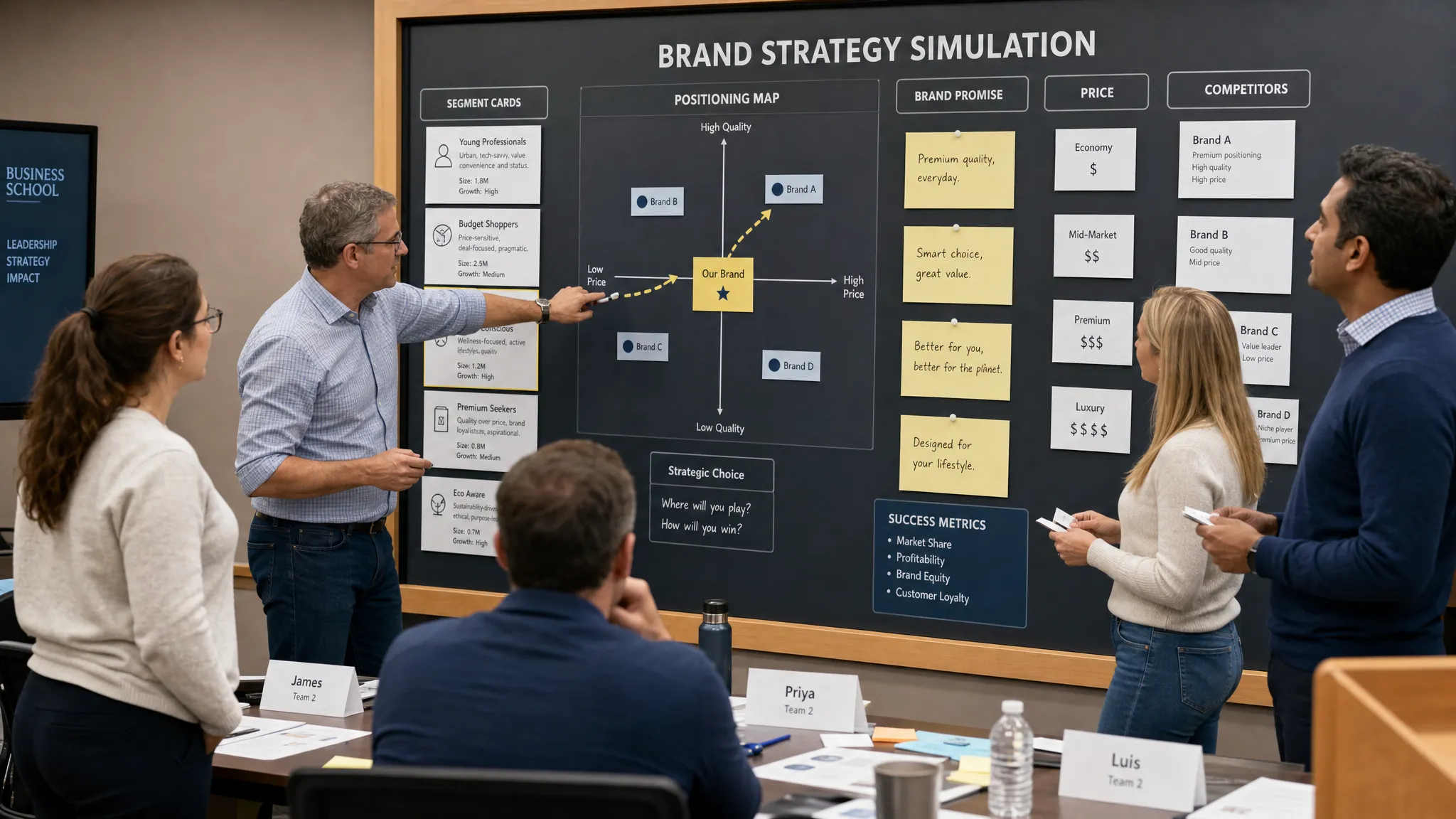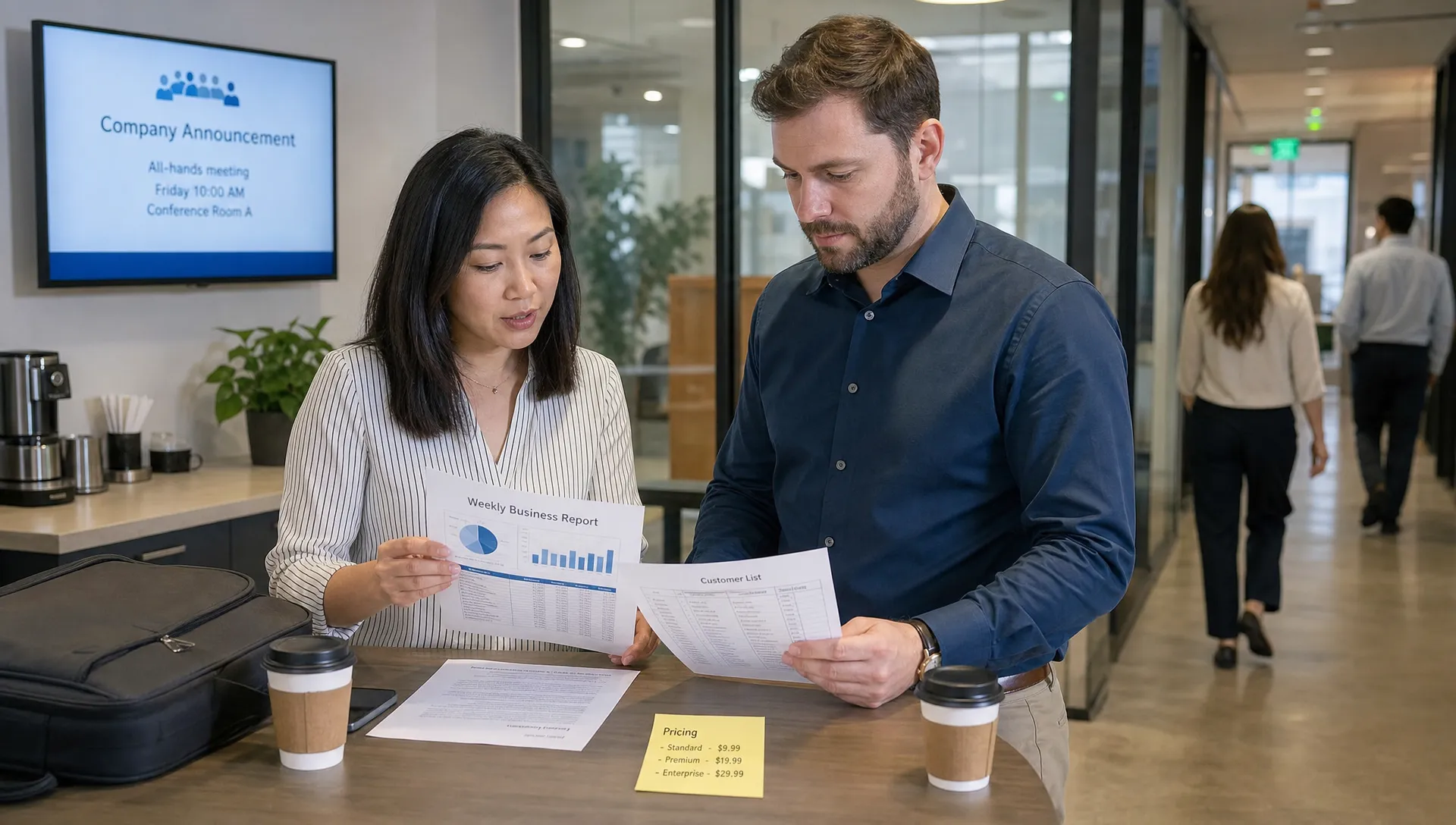
Organizations rarely fail because people lack access to information. They fail because people must make imperfect decisions under time pressure, with incomplete data, competing priorities, and consequences that unfold later. That is exactly where simulation-based learning becomes valuable.
Instead of asking learners to remember a framework, a simulation asks them to use it. Participants diagnose a situation, choose a course of action, see the results, and adjust. Over several rounds, they begin to understand not just what a good decision looks like, but why it works, when it fails, and how tradeoffs shape outcomes.
For business schools, executive education teams, and corporate L&D leaders, the promise is simple: better practice produces better judgment. Simulation-based learning creates that practice in a safe, structured, and highly engaging environment.
Why decision-making is hard to teach in a traditional classroom
Decision-making is not a single skill. It is a combination of analytical thinking, strategic judgment, collaboration, emotional regulation, and the ability to act despite uncertainty. Traditional lectures can explain these concepts, but explanation is not the same as capability.
A learner may understand market segmentation in theory, then struggle when a competitor cuts prices. A sales manager may know negotiation principles, then concede too quickly when a simulated buyer applies pressure. A brand team may agree that long-term positioning matters, then overreact to one poor quarterly result.
These gaps appear because real decision-making is contextual. People do not make choices in isolation. They make them while balancing budgets, customer behavior, competitor moves, team disagreement, and leadership expectations.
Simulation-based learning gives learners a controlled version of that complexity. It allows them to test decisions without risking a real customer relationship, quarterly target, or product launch. More importantly, it turns mistakes into data.
What simulation-based learning changes
The biggest shift is from passive understanding to active judgment. Learners are no longer spectators. They are responsible for choices, outcomes, and reflection.
In a well-designed business simulation, participants must connect concepts that are often taught separately. Pricing affects margin. Marketing investment affects awareness. Sales decisions affect pipeline quality. Innovation choices affect competitive advantage. Strategy is no longer an abstract plan, but a series of interdependent decisions.
This is why simulations are especially effective for business education and corporate training. They compress experience. Learners can live through several market cycles, competitive reactions, and strategic pivots in a few hours or days. That kind of accelerated practice is difficult to replicate through case discussion alone.
| Traditional learning often emphasizes | Simulation-based learning emphasizes |
|---|---|
| Remembering concepts | Applying concepts in context |
| One correct answer | Tradeoffs between viable choices |
| Instructor-led explanation | Learner-led experimentation |
| Delayed or limited feedback | Immediate performance consequences |
| Individual comprehension | Team alignment and shared judgment |
| Static business examples | Dynamic competitive environments |
The result is not simply higher engagement, although engagement matters. The deeper benefit is that learners build mental models they can reuse when facing unfamiliar business situations.
The decision-making muscles simulations build
Better decision-makers do not just know more. They notice more, ask better questions, and adapt faster. Simulation-based learning develops these habits because the environment repeatedly rewards thoughtful action and exposes weak assumptions.
Key capabilities include:
- Systems thinking: Learners see how one decision affects other parts of the business, such as how discounting may lift short-term sales while weakening perceived value.
- Prioritization: Teams must decide what matters most when resources are limited, which mirrors the reality of strategy execution.
- Risk assessment: Participants learn to distinguish between smart risk, avoidable risk, and decisions based on unsupported optimism.
- Competitive awareness: Learners experience how rival actions can change the meaning of their own strategy.
- Collaboration under pressure: Teams must align around a decision even when data is ambiguous or opinions differ.
- Reflection and adaptation: After feedback, participants must revise their assumptions rather than defend them.
These are durable business skills. Whether someone works in marketing, sales, innovation, brand management, or general management, the ability to make better decisions under uncertainty has practical value.
The learning loop: decide, experience, reflect, improve
A simulation is not effective simply because it is interactive. It works when the learning experience follows a deliberate loop.
First, learners receive a business challenge. The challenge must be clear enough to act on, but complex enough to require judgment. For example, a team may need to grow share in a competitive market, defend a premium brand, enter a new segment, or improve sales performance.
Next, they make decisions. This stage is where learning becomes personal. Participants must commit to choices. They cannot simply discuss what a company should do in theory. They must allocate resources, set priorities, and accept the consequences.
Then, the simulation provides feedback. That feedback may include financial results, market response, customer behavior, competitor moves, or team performance indicators. The key is that feedback links decisions to outcomes.
Finally, learners reflect. The debrief is where much of the learning becomes explicit. A skilled facilitator helps participants ask: What did we assume? What surprised us? Which signals did we ignore? What would we do differently next round?
When repeated, this loop creates progressive improvement. Learners begin to anticipate consequences, challenge assumptions earlier, and use data more effectively. If you want a deeper foundation on the method itself, StratX Simulations offers a helpful guide to simulation-based learning in executive education.
Realistic context is what makes the learning stick
The best simulations do not overwhelm learners with complexity for its own sake. They create meaningful realism. That means the decisions, constraints, and feedback feel close enough to the real world that participants take them seriously.
Realism can come from market dynamics, customer segments, competitive behavior, financial tradeoffs, or interpersonal pressure. It can also come from the quality of the digital experience itself. Across industries, organizations are learning that virtual environments need to feel coherent and intentional to create belief. Creative-technology studios that build immersive brand worlds, such as The New Face’s iconic virtual experiences, show how strategy, narrative, and interaction can make digital experiences feel tangible rather than decorative.
The same principle applies to learning design. A simulation should not be a game pasted onto a course. It should be a purposeful environment where every decision reinforces the learning objective.

Why simulations work for both academic and corporate audiences
In academic settings, simulations help students move beyond memorization. They make business concepts feel connected and consequential. A student who has run a simulated marketing plan, defended a brand position, or responded to competitive pressure is more likely to understand how theory operates in practice.
For corporate learners, the value is different but equally important. Employees often already have experience, but that experience may be uneven. Simulations create a shared practice field. Teams can test strategic thinking, align on decision principles, and build a common language for performance.
This is especially useful for organizations training cross-functional groups. Marketing, sales, finance, and product teams may all look at the same business challenge differently. A simulation forces those perspectives into one decision process, making hidden assumptions visible.
If you are comparing formats, StratX Simulations’ overview of business simulations explains how different simulation types support experiential learning across business disciplines.
Designing simulation-based learning for better decisions
The quality of the learning experience depends on design. A simulation should be chosen and facilitated based on the decisions learners need to improve, not just the topic on the course agenda.
Start by defining the target decision. Do learners need to improve pricing judgment, strategic resource allocation, sales negotiation, brand portfolio management, or innovation prioritization? The more specific the decision capability, the easier it is to design the right experience.
Next, match the level of complexity to the audience. Senior executives may need ambiguity, competitive disruption, and long-term tradeoffs. Undergraduate students may need a more guided environment that helps them connect core concepts. Sales teams may need repeated practice with buyer behavior and negotiation pressure.
A useful design check is to ask whether the simulation creates consequences that learners care about. If the outcome feels arbitrary, they will disengage. If the feedback feels credible, they will lean in.
| Design lever | Why it matters | Facilitator question |
|---|---|---|
| Clear learning objective | Keeps the simulation focused on capability, not entertainment | What decision should learners make better afterward? |
| Realistic constraints | Mirrors the pressure of business environments | What limits make this decision difficult? |
| Timely feedback | Helps learners connect choices to outcomes | What evidence will show whether the decision worked? |
| Structured debrief | Turns activity into insight | What assumptions changed during the simulation? |
| Repetition | Builds confidence and pattern recognition | How will learners apply feedback in the next round? |
The facilitator’s role is critical. Simulations are powerful because learners act, but action alone is not enough. Instructors and trainers help participants interpret outcomes, connect experience to theory, and transfer lessons to real work.
The role of feedback in building judgment
Instant feedback is one of the main advantages of simulation-based learning. In real business settings, the consequences of a decision may take months to appear. By then, the connection between action and outcome is often blurred by other variables.
Simulations shorten that feedback cycle. Learners can see how their choices affect performance and then make a new decision while the lesson is still fresh. This supports faster pattern recognition.
Feedback also reduces overconfidence. Many learners enter a simulation believing they have a strong strategy. Results reveal whether that confidence is justified. When outcomes disappoint, the environment is safe enough for honest reflection. When outcomes improve, learners can identify what changed and why.
For sales and marketing teams, this is particularly valuable because commercial decisions involve both analysis and human behavior. StratX Simulations explores this in more detail in its article on why sales and marketing training works better in simulations.
Measuring whether decision-making has improved
A strong simulation program should be evaluated by more than participant satisfaction. Enjoyment is useful, but the real goal is improved decision quality.
Measurement can include in-simulation performance, quality of reasoning during debriefs, team decision processes, and post-program application. For corporate training, managers may also look for changes in business conversations, such as better use of data, clearer tradeoff discussions, or more disciplined strategic choices.
In academic settings, assessment can combine simulation results with reflective assignments. Students can explain what they decided, what happened, and how they would revise their approach. This reveals whether they understand the causal logic behind outcomes.
Good measurement does not require reducing every learning outcome to a single score. Decision-making is complex. The goal is to gather enough evidence to see whether learners are becoming more thoughtful, adaptive, and effective.
Common mistakes to avoid
Simulation-based learning is powerful, but it can underperform when treated as a plug-and-play activity. The most common mistakes are preventable.
Avoid these pitfalls:
- Choosing a simulation because it looks impressive, rather than because it fits the learning goal.
- Skipping the debrief, which is where experience becomes transferable insight.
- Overloading learners with too many variables before they understand the decision logic.
- Treating simulation results as the only measure of learning, instead of examining reasoning and improvement.
- Failing to connect the simulation back to real workplace or classroom challenges.
The best programs make the simulation part of a broader learning journey. Pre-work prepares learners, simulation rounds create experience, debriefs surface insight, and follow-up activities support transfer.
Frequently Asked Questions
What is simulation-based learning in business education? Simulation-based learning is an experiential approach where learners make business decisions in a realistic scenario, receive feedback, and improve through reflection and repeated practice.
How does simulation-based learning improve decision-making? It helps learners practice under realistic constraints, see the consequences of their choices, challenge assumptions, and refine their judgment in a safe environment.
Is simulation-based learning only for executives? No. It can be used with undergraduate students, MBA participants, executive education cohorts, sales teams, marketing teams, and corporate managers. The simulation design should match the audience’s experience level.
What makes a business simulation effective? An effective simulation has clear learning objectives, realistic tradeoffs, meaningful feedback, skilled facilitation, and a structured debrief that connects the experience to real-world decisions.
Can simulations replace lectures? Simulations do not need to replace lectures entirely. They are often most effective when combined with conceptual teaching, discussion, coaching, and reflection.
Build better decision-makers through practice
Better decision-making does not come from information alone. It comes from practice, feedback, reflection, and the confidence to act in complex situations. That is what simulation-based learning is designed to provide.
For educators and corporate training leaders, the opportunity is to move beyond content delivery and create experiences that change how learners think, collaborate, and decide. StratX Simulations supports that shift with experiential business simulation software for marketing, strategy, sales, and innovation, helping learners turn concepts into practical judgment that lasts.