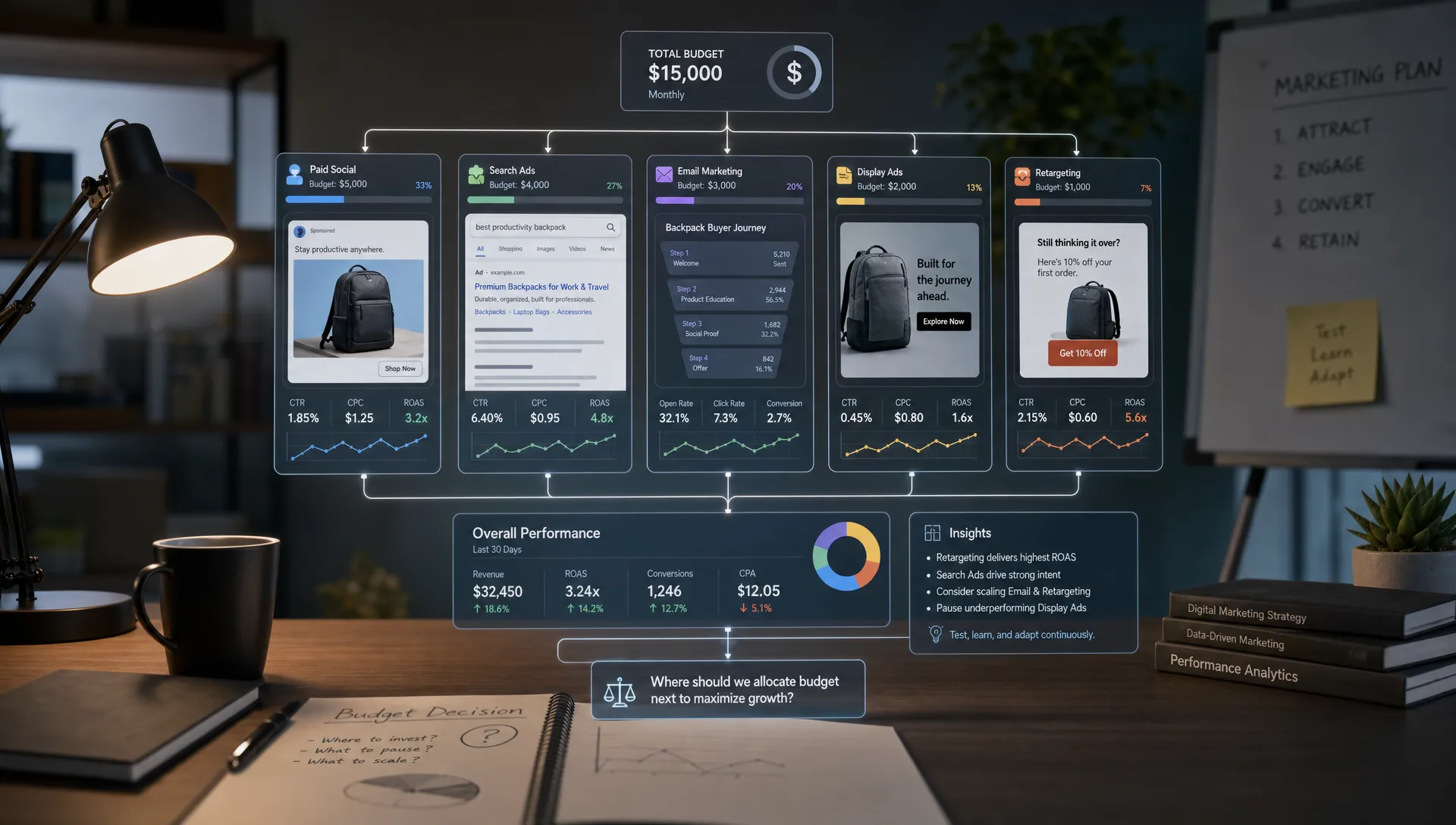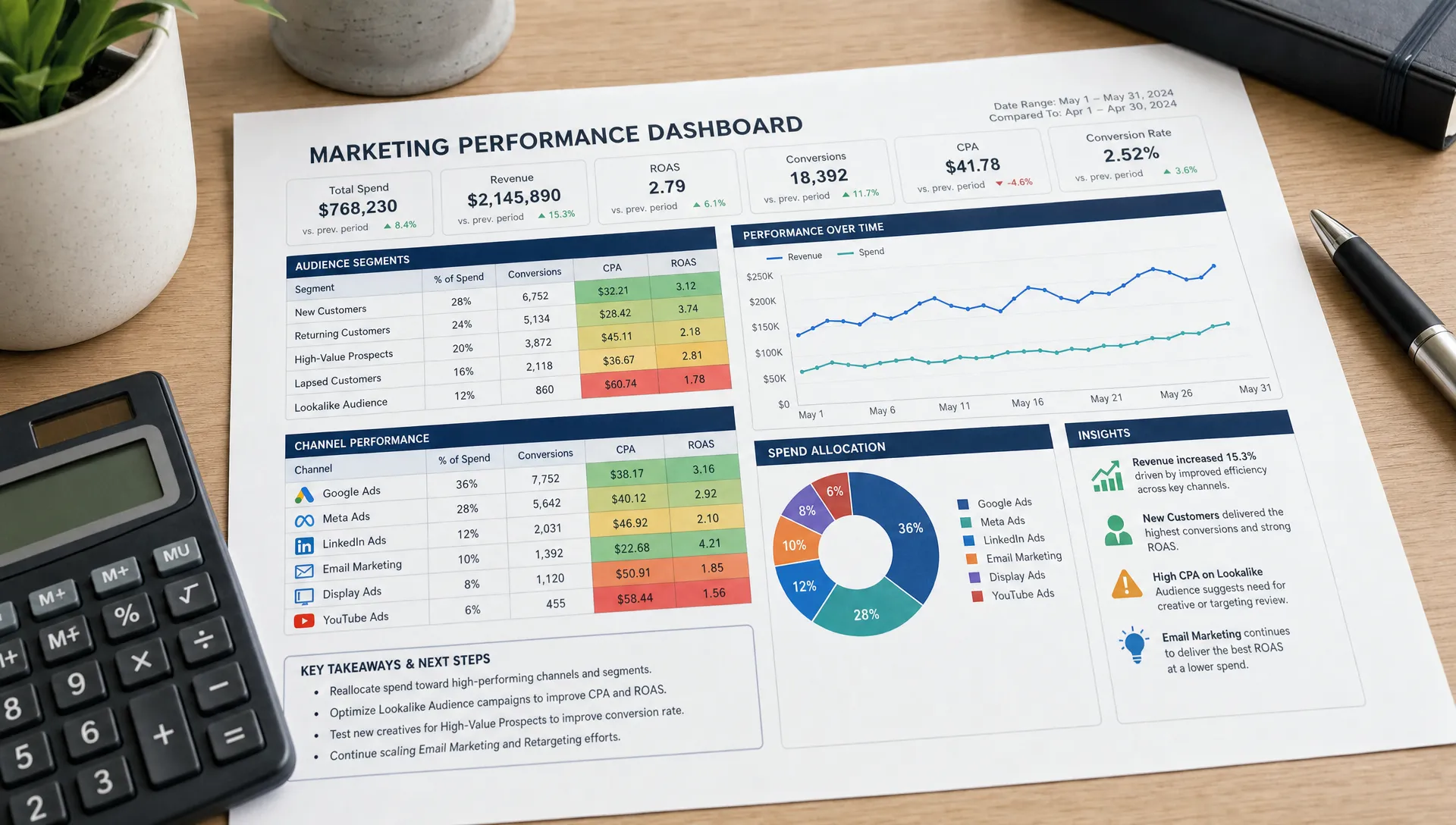
International marketing is difficult to teach through lectures alone because the subject is full of moving parts. Learners need to understand culture, competition, market entry, localization, pricing, distribution, media, brand positioning, and the financial impact of every decision. They also need to see how those decisions interact across borders.
That is where simulations change the learning experience. Instead of asking students or managers to memorize frameworks, a simulation asks them to make decisions, live with the results, and explain what they would do differently next time. For international marketing, that shift is especially powerful because global strategy is rarely a single “right answer.” It is a sequence of tradeoffs made under uncertainty.
Below is a practical way to teach international marketing with simulations, whether you are designing a university course, an executive education program, or a corporate training module for marketing teams.
Why simulations work so well for international marketing
International marketing combines analysis and judgment. Learners may understand market attractiveness models in theory, but struggle when they must decide whether to enter a large but highly competitive country, adapt a product for local preferences, or allocate a limited budget across regions.
A simulation creates a safe environment for those decisions. Learners can test assumptions, receive feedback, compare outcomes, and recognize the consequences of their choices without risking real revenue or brand equity.
This matters because global marketing problems are interconnected. A team might choose a premium positioning in one country, but that decision affects pricing, media, channel choice, sales expectations, and competitor response. A well-designed business simulation makes those connections visible.
Simulations also improve engagement. International marketing can feel abstract when taught only through cases and readings. When learners are responsible for a brand, a budget, or a market entry plan, they become emotionally invested in the outcome. That sense of ownership often leads to better questions, stronger debates, and deeper reflection.
Start with clear international marketing learning outcomes
Before choosing a simulation or designing activities around it, define what learners should be able to do by the end of the module. The most effective simulation-based courses are not built around “playing the game.” They are built around measurable learning objectives.
For international marketing, strong learning outcomes often include the ability to:
- Evaluate foreign market attractiveness using both quantitative and qualitative data
- Compare standardization and localization options across countries
- Segment international customers and choose priority targets
- Adapt product, pricing, promotion, and distribution decisions to local conditions
- Interpret market feedback and revise strategy over multiple decision rounds
- Defend global marketing choices using evidence, not intuition alone
These outcomes help you decide how much structure learners need. Undergraduate students may need more guided worksheets and interim checkpoints. MBA students or executives may benefit from greater ambiguity, more competitive pressure, and deeper post-round analysis.
If you are designing a broader learning journey rather than a single class, StratX Simulations’ practical guide to integrating simulations into learning programs offers useful guidance on aligning simulations with program goals and learner needs.
Map international marketing concepts to simulation decisions
A common mistake is to run a simulation as a standalone activity and hope learners make the connection to course concepts on their own. Instead, map each major concept to a decision learners must make inside the simulation.
| International marketing concept | Simulation activity | Evidence of learning |
|---|---|---|
| Market selection | Compare countries, segments, or regions before investing | Learners justify entry priorities using data |
| Localization versus standardization | Adjust positioning, product, pricing, or communication by market | Learners explain what should stay global and what should adapt |
| Competitive strategy | Respond to rival moves across markets | Learners identify threats and revise strategy |
| Budget allocation | Distribute resources across countries, brands, or channels | Learners connect spending choices to performance outcomes |
| Brand management | Maintain a coherent brand while adapting locally | Learners balance consistency with relevance |
| Performance analysis | Review simulation feedback after each round | Learners diagnose results and propose next actions |
This mapping keeps the simulation anchored in pedagogy. It also helps learners understand that decisions are not isolated. A product adaptation decision may affect cost structure. A pricing decision may change brand perception. A channel decision may influence customer reach and profitability.
Design the simulation experience in phases
The best international marketing simulations usually follow a rhythm: prepare, decide, receive feedback, reflect, and improve. Rather than compressing everything into one session, structure the experience across phases so learners build skill progressively.
Phase 1: Build the global context
Begin by giving learners a clear international marketing challenge. For example, they may need to expand a brand into new markets, grow share across existing regions, or defend a global position against local competitors.
At this stage, ask learners to analyze the business environment before they make decisions. They should consider factors such as customer needs, competitor intensity, cultural expectations, purchasing power, regulatory constraints, and channel access. The goal is not to produce a perfect market report. The goal is to help them form hypotheses they can test during the simulation.
You can make this phase more realistic by assigning teams different assumptions. One team may believe speed to market is the priority. Another may prioritize premium brand equity. Another may focus on cost efficiency. These strategic lenses will lead to different decisions and richer discussion after the first results.
Phase 2: Make the first strategic choices
Once learners understand the context, move them into the first decision round. Keep the initial focus on a few big choices rather than overwhelming them with every lever at once.
Useful first-round questions include:
- Which market or segment should we prioritize first?
- Should we lead with a standardized offer or adapt locally?
- What position do we want to own in the customer’s mind?
- How aggressive should our pricing be?
- Which channels or communication levers deserve the largest share of the budget?
Encourage teams to write a short decision memo before submitting. This memo should capture their assumptions and expected outcomes. After results are released, they can compare what they expected with what actually happened.
Phase 3: Introduce competitive and cross-market complexity
After the first round, increase the level of complexity. Competitors may react. Customer preferences may shift. A market that looked attractive may become expensive to defend. A smaller market may show unexpectedly strong growth.
This is where simulations become particularly valuable. Learners see that international marketing is not just about entry strategy. It is also about adaptation over time.
For example, a team might discover that its global campaign performs well in one region but poorly in another. Instead of simply saying “culture matters,” they must decide what to change. Should they adapt messaging? Adjust the product? Shift media investment? Reposition the brand? Exit the market? The simulation turns a broad concept into a concrete managerial decision.
This is also a good moment to connect simulation choices to real industry practices. For instance, sports, fitness, and wellness brands often have to balance global identity with local performance marketing, e-commerce optimization, and channel-specific creative. Looking at how performance marketing and brand accelerator teams support growth brands can help learners see how strategic positioning turns into measurable execution across markets.
Phase 4: Use feedback to teach diagnosis, not just results
Simulation feedback is most powerful when learners analyze why results happened. If a team performs poorly, resist the temptation to frame it as failure. Instead, treat it as data.
Ask learners to separate symptoms from causes. A drop in share may be the symptom. The cause might be poor targeting, underinvestment, weak positioning, price mismatch, or a competitor’s move. A strong international marketing debrief pushes learners to investigate the chain of cause and effect.
You can guide the analysis with questions such as:
- Which assumptions were confirmed by the market response?
- Which assumptions were contradicted?
- Did our strategy fail, or did our execution fail?
- Did we over-standardize or over-localize?
- How did competitors influence our results?
- What would we do differently if this were a real market launch?
This reflection process is where much of the learning sticks. Learners begin to recognize patterns and improve the quality of their reasoning. StratX has also explored how learners can practice core marketing management skills in real time, which is especially relevant when international marketing decisions must be made under pressure.

Teach localization through tradeoffs, not slogans
“Think global, act local” is easy to say, but difficult to apply. Simulations help learners move beyond slogans by forcing them to decide what localization actually means.
In an international marketing simulation, localization can appear in several forms. Learners may adapt product features, pricing, distribution intensity, sales messages, promotional budgets, or target segments. Each choice has consequences.
A useful classroom exercise is to ask teams to classify decisions into three categories after each round.
| Decision type | Guiding question | Example |
|---|---|---|
| Global consistency | What should remain the same everywhere? | Core brand promise or quality standard |
| Local adaptation | What must change to fit market conditions? | Messaging, pricing, or channel mix |
| Experimental variation | What should we test before scaling? | A new segment, campaign, or offer bundle |
This framework helps learners avoid two common extremes. One extreme is assuming every market needs a completely unique strategy, which can create complexity and dilute the brand. The other is assuming a successful domestic strategy can be exported unchanged, which can lead to poor market fit.
The simulation gives learners evidence to support a more nuanced approach.
Bring culture into the simulation debrief
International marketing courses often include cultural frameworks, but learners may treat them as checklists. Simulations can make cultural analysis more practical if you integrate it into the debrief.
Rather than asking learners to describe a country’s culture in general terms, ask how cultural assumptions influenced specific marketing decisions. Did they assume customers would respond to premium positioning? Did they expect digital channels to dominate? Did they overestimate brand loyalty? Did they misread price sensitivity?
The key is to connect culture to behavior. International marketing is not about stereotypes. It is about understanding how preferences, trust, communication norms, and buying processes vary across contexts.
You can also ask learners to revisit their own team dynamics. In international cohorts, teams often bring different assumptions about risk, leadership, negotiation, and decision-making. The simulation becomes a double learning experience: learners study international markets while also practicing cross-cultural collaboration.
Add digital marketing and channel decisions
Modern international marketing is inseparable from digital execution. Even when the core objective is strategy, learners should understand how global marketing decisions translate into channel choices.
This does not mean turning every international marketing course into a technical digital marketing course. Instead, use the simulation to show how channels support the strategy.
For example, learners can compare how digital channels might help a brand test demand in a new country before committing to a large physical distribution investment. They can also evaluate whether paid media, search visibility, email, e-commerce, retail partnerships, or sales teams are most relevant for different markets.
This is especially useful for corporate training, where participants may come from different functions. Sales, marketing, finance, and product teams can see how their decisions interact in a global launch or expansion scenario.
For educators who want to go deeper into digital pedagogy, StratX has also shared effective ways to teach digital marketing to university students, including experiential approaches that complement simulation-based learning.
Assess both the outcome and the thinking process
One risk in simulation-based teaching is that learners focus only on winning. Competition can be motivating, but ranking alone is not a complete assessment of learning. A team can make a smart decision that performs poorly because of uncertainty, while another team may benefit from luck or competitor mistakes.
A stronger assessment model evaluates both performance and reasoning.
Consider using a balanced rubric like this:
| Assessment area | What to evaluate | Suggested weight |
|---|---|---|
| Market analysis | Quality of country, customer, and competitor diagnosis | 25% |
| Strategic coherence | Alignment between objectives, targeting, positioning, and resource allocation | 25% |
| Adaptation over time | Ability to learn from feedback and improve decisions | 20% |
| Team decision process | Evidence of collaboration, debate, and role clarity | 15% |
| Final reflection | Ability to explain results and transfer lessons to real business contexts | 15% |
You can adjust the weightings depending on your course. In an executive program, final reflection and transfer to the workplace may deserve more emphasis. In an undergraduate course, market analysis and conceptual application may be more important.
Ask learners to submit a final reflection that includes what they would repeat, what they would change, and what surprised them. This helps shift the mindset from “we won or lost” to “we learned how to make better international marketing decisions.”
Adapt simulations for corporate training
In corporate settings, international marketing simulations can be used to align teams around common decision-making principles. Participants may already have market experience, but they often work in functional silos. A simulation gives them a shared environment where they must make integrated decisions.
For corporate learners, keep the experience close to business reality. Use industry-relevant examples in the briefing, encourage participants to connect decisions to their current markets, and dedicate enough time to action planning after the simulation.
A strong corporate debrief might ask:
- Where do we over-standardize in our current international marketing approach?
- Where do we create unnecessary local complexity?
- Which metrics do we rely on too heavily?
- Which market signals do we ignore until it is too late?
- How can sales, marketing, and product teams coordinate better across regions?
The goal is not only to teach concepts. It is to create a common language for better decisions back on the job.
Common pitfalls to avoid
Simulations are powerful, but they need thoughtful facilitation. Avoid these common mistakes when teaching international marketing with simulations.
First, do not overload learners at the beginning. International marketing already involves complexity. If learners are confronted with too many variables before they understand the strategic context, they may make random decisions instead of reasoned choices.
Second, do not skip the debrief. The simulation results are not the end of the learning experience. They are the beginning of the most important conversation.
Third, do not let teams hide behind numbers. Quantitative feedback is valuable, but international marketing also requires judgment about customers, culture, brand meaning, and long-term positioning.
Fourth, do not treat all markets as interchangeable. Even in a simplified simulation environment, emphasize that countries and regions differ in meaningful ways. The point is not to memorize facts about every market. The point is to build a disciplined approach to learning about new markets.
Finally, do not reward only short-term performance. International marketing often requires investment, patience, and brand building. If the simulation allows multiple rounds, ask learners to consider both immediate results and long-term strategic position.
A sample teaching flow for an international marketing module
Here is a simple structure you can adapt for a course or workshop.
| Session | Focus | Learner output |
|---|---|---|
| Session 1 | International marketing challenge and market analysis | Initial market attractiveness assessment |
| Session 2 | Segmentation, targeting, positioning, and entry priorities | First decision memo |
| Session 3 | Simulation round and performance diagnosis | Results analysis and revised assumptions |
| Session 4 | Localization, pricing, channels, and competitor response | Second decision memo |
| Session 5 | Final round, debrief, and transfer | Strategy presentation and reflection |
This flow works because it gives learners time to think before acting, then requires them to revise their thinking after feedback. It also mirrors real international marketing work: analyze, decide, execute, learn, and adapt.
Frequently Asked Questions
Can simulations replace case studies in an international marketing course? Simulations do not need to replace case studies. They often work best alongside them. Cases help learners analyze real business situations, while simulations let them make decisions and experience consequences over time.
How many simulation rounds are ideal for teaching international marketing? Three to five rounds are often enough for learners to see the impact of their choices, adapt to feedback, and understand competitive dynamics. Short workshops may use fewer rounds, while full courses can support a longer sequence.
Do learners need prior international marketing knowledge before using a simulation? Not necessarily. Beginners can use simulations if the instructor provides enough structure, clear objectives, and guided reflection. More advanced learners can handle greater ambiguity and more complex decision variables.
How do you prevent students from focusing only on winning the simulation? Use an assessment rubric that values analysis, strategic coherence, adaptation, teamwork, and reflection. Make it clear that the quality of reasoning matters as much as final ranking.
Are simulations useful for corporate international marketing training? Yes. Simulations help corporate teams practice cross-functional decision-making, test global versus local assumptions, and build a shared language for market expansion, brand management, and resource allocation.
Make international marketing practical, memorable, and measurable
International marketing is best learned through practice. Learners need to feel the pressure of choosing markets, allocating budgets, adapting strategies, and responding to feedback. Simulations make those decisions tangible.
With the right structure, a simulation can help learners move from knowing international marketing concepts to applying them with confidence. They learn to analyze markets, defend strategic choices, collaborate across perspectives, and improve through feedback.
StratX Simulations helps educators and corporate trainers create these kinds of experiential learning moments through business simulation software in marketing, strategy, sales, and innovation. If your goal is to make international marketing more engaging and decision-focused, simulation-based learning is one of the most effective ways to get concepts to stick.