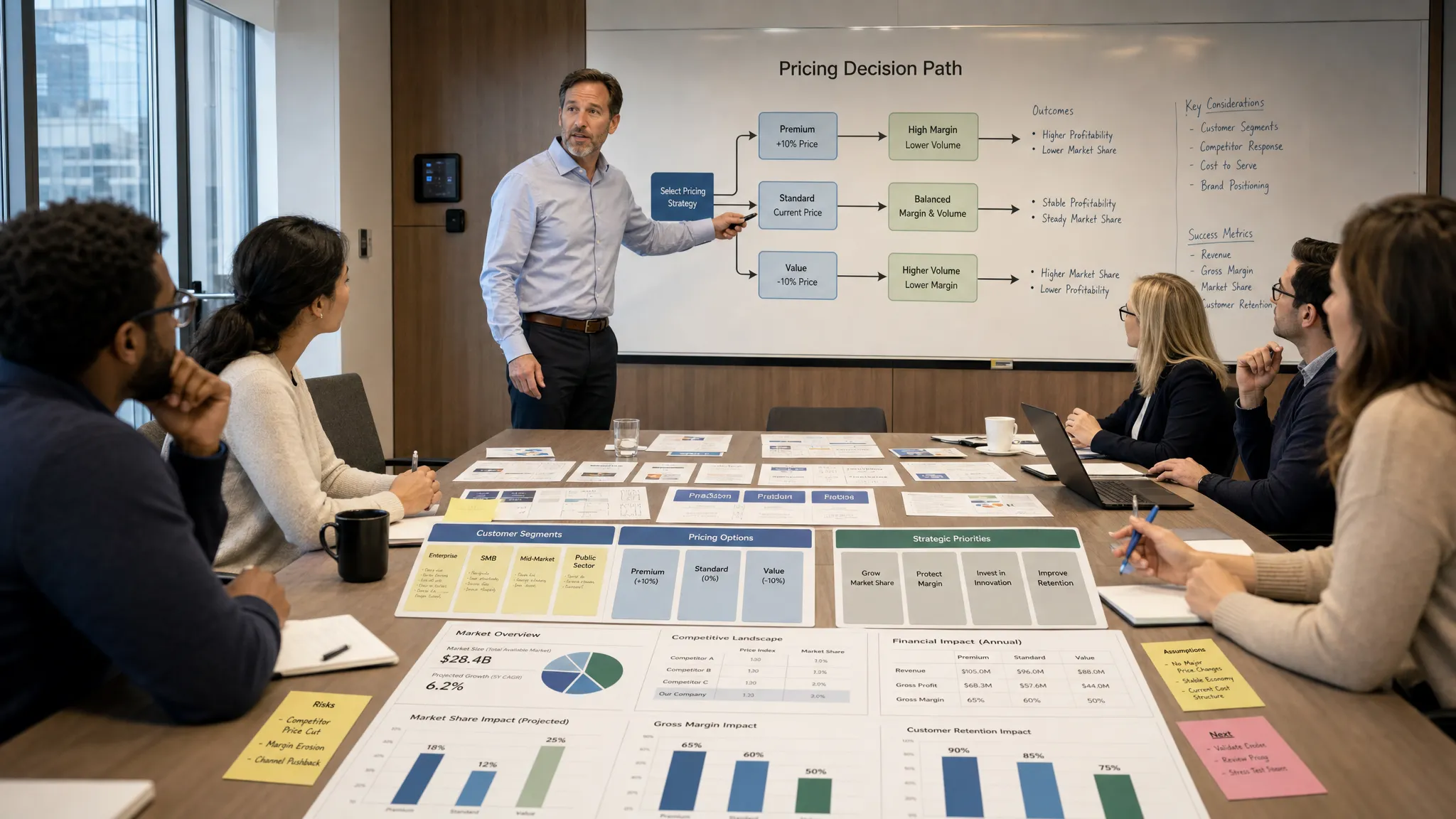
Effective corporate social responsibility training should do more than explain values, policies or reporting frameworks. It should prepare people to make difficult choices when commercial pressure, stakeholder expectations and long-term responsibility pull in different directions.
That is where tradeoffs matter. CSR rarely fails because employees cannot define ethics or sustainability. It fails when a team has to choose between lower cost and supplier risk, faster growth and community impact, a persuasive campaign and a responsible claim. Standards such as ISO 26000 and the UN Global Compact Ten Principles provide useful guidance, but employees still need practice applying those ideas under constraints.
Why corporate social responsibility training needs tradeoffs
A tradeoff-based approach starts from a simple premise: responsible business decisions are rarely obvious in the moment. A procurement manager may know forced labor risks are unacceptable, yet still face supplier shortages and aggressive margin targets. A marketer may want to promote a product's environmental benefits, yet need to avoid overclaiming. A country manager may see growth potential in a market where governance risks are high.
When corporate social responsibility training stays at the level of awareness, learners can agree with every principle without changing how they behave. Tradeoffs force learners to reveal their assumptions, defend their priorities and see the consequences of their choices.
This is not about making CSR less principled. It is about making it operational. Values become more durable when people learn how to use them in situations where every option has a cost.
The tradeoffs employees need to practice
CSR training becomes more useful when it reflects the tensions people actually face in their roles. A finance team, product team, sales organization and procurement function will all experience responsibility differently, even if they share the same corporate code of conduct.
This is why corporate social responsibility training works best when it moves from abstract commitments to role-specific decisions. Learners should not only ask, “What is the right thing to do?” They should also ask, “What evidence do we need, who is affected and what risk are we accepting?”
| CSR tradeoff | Common tension | Decision skill developed |
|---|---|---|
| Cost versus supplier standards | Lower prices may hide labor, safety or environmental risks | Evaluating sourcing risk beyond unit cost |
| Growth versus community impact | Expansion can create jobs and strain local resources | Balancing business opportunity with stakeholder impact |
| Persuasion versus responsible marketing | Strong claims may drive demand and invite greenwashing risk | Testing claims against evidence and audience expectations |
| Innovation speed versus product responsibility | Fast launches can outpace safety, privacy or lifecycle analysis | Building governance into product decisions |
| Short-term profit versus long-term trust | Quarterly pressure can conflict with reputation and resilience | Weighing financial outcomes against strategic risk |
The goal is not to produce identical answers from every learner. The goal is to build a shared decision process, so teams can disagree productively and make defensible choices.
Designing the learning experience around decisions, not slogans
For L&D teams, corporate social responsibility training becomes stronger when each module is built around a decision that has no perfect answer. The learner needs a role, a target, a constraint, a set of stakeholders and incomplete information.
Start with a role-specific dilemma
A generic ethics scenario often feels distant from the work. A better scenario places learners inside a recognizable business problem. For example, a brand team may need to redesign packaging to reduce waste while protecting margins and shelf appeal. A sales team may need to decide whether to pursue a high-revenue account with questionable labor practices in its supply chain.
The dilemma should be specific enough to feel real, but not so detailed that the “correct” answer becomes obvious. Learners need enough ambiguity to practice judgment.
Make consequences visible
Tradeoffs become memorable when learners can see what their decision changes. A lower-cost material may improve profitability, then increase end-of-life waste. A cautious sustainability claim may reduce campaign impact, then protect customer trust. A stricter supplier policy may slow production, then reduce reputational exposure.
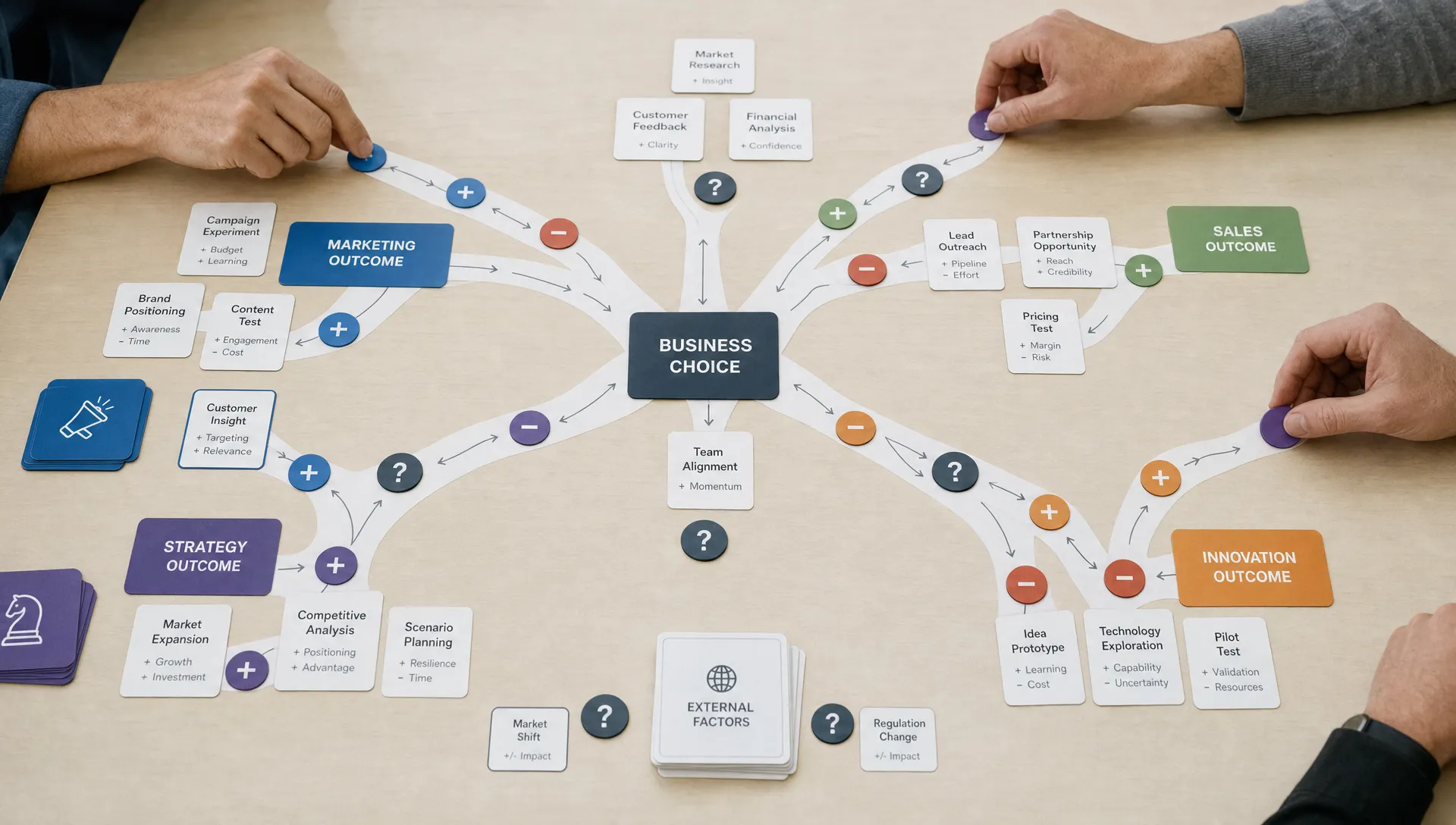
This is one reason simulations can be effective in CSR learning. They let people test decisions, receive feedback and adjust without creating real-world damage.
Debrief the reasoning
The debrief is where much of the learning happens. Instead of asking only who “won,” facilitators should ask why teams prioritized certain stakeholders, what data they trusted and which risks they underestimated. This aligns with a broader shift toward corporate learning and development that changes behavior, not just content completion.
Scenario examples that turn CSR into practical judgment
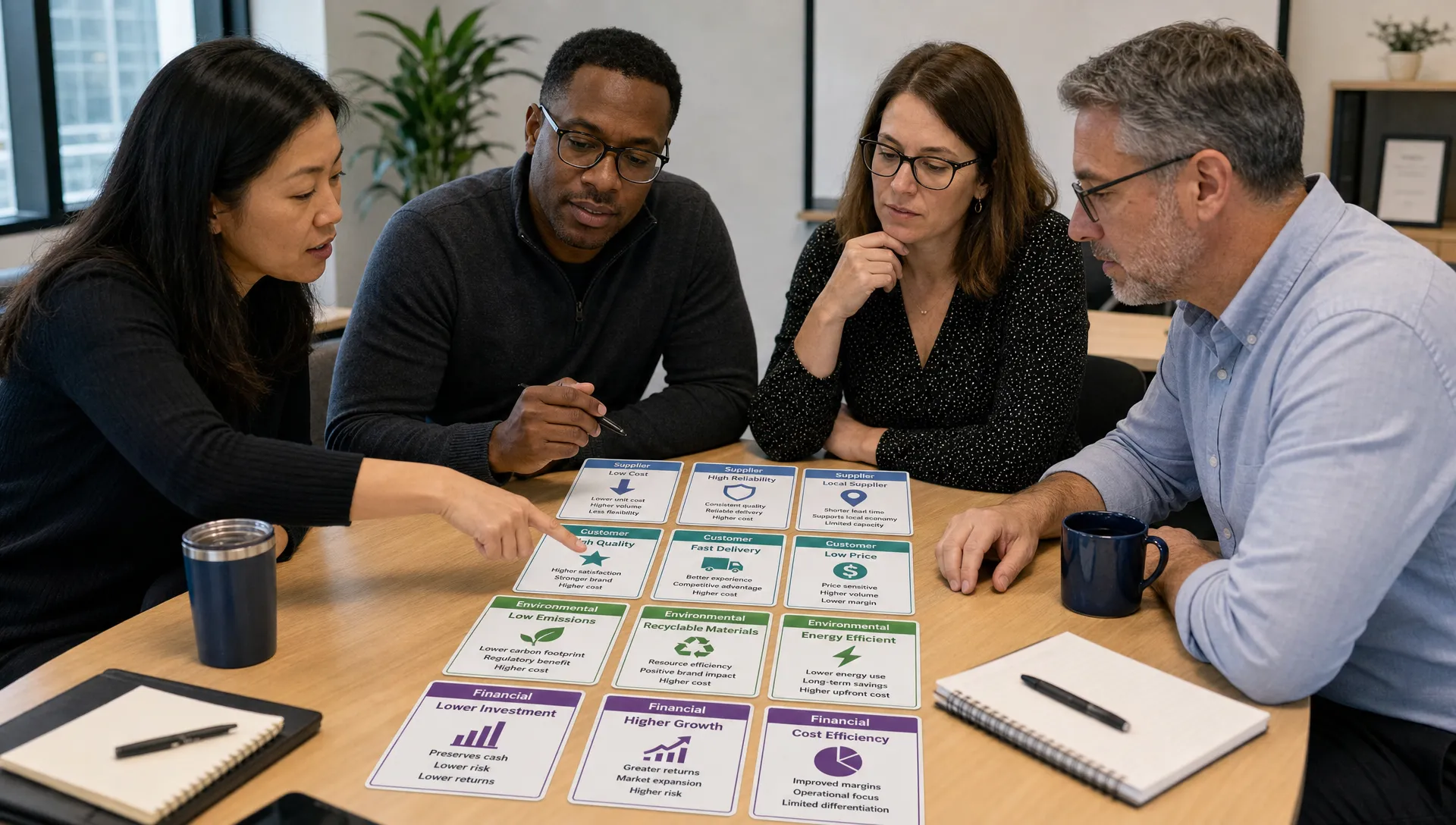
A practical corporate social responsibility training experience might ask learners to work through scenarios like these, then compare outcomes across teams.
Procurement scenario: A supplier offers a 12 percent cost reduction, but recent audits show weak worker safety controls. Learners must decide whether to continue, require remediation, split volume across suppliers or absorb higher costs elsewhere.
Marketing scenario: A product uses recycled materials, but only in one component. Learners must choose how to communicate the benefit without overstating the environmental impact. This builds judgment around evidence, customer trust and green claims.
Product lifecycle scenario: A team can launch a profitable product line using materials that are difficult to recycle, or delay launch to redesign for circularity. The decision connects innovation, margins and end-of-life responsibility. For instructors and corporate educators exploring this area, StratX has shared examples of teaching circularity in marketing through simulation-based learning.
Market expansion scenario: A business unit is considering a high-growth region with governance concerns. Learners must evaluate local partnerships, compliance exposure, community expectations and the revenue opportunity.
These scenarios work because they make responsibility concrete. Learners cannot hide behind broad statements about “doing the right thing.” They must choose, explain and adapt.
How simulations make tradeoffs safe to experience
Simulation-based corporate social responsibility training gives learners a safe environment to experience the consequences of decisions that would be too risky, slow or expensive to test in the real business. Instead of hearing that stakeholder trust matters, learners can see how trust changes when they overprioritize short-term gains.
This matters for adult learners because judgment improves through practice and feedback. A simulation can compress time, show second-order effects and create healthy competition between teams. It also helps facilitators move from lecturing to coaching.
A good simulation does not need to punish every imperfect choice. It should help learners understand tradeoffs and refine their assumptions. For example, one team may maximize near-term profit, then discover a reputational penalty later. Another may invest heavily in sustainability, then learn that customers do not understand the value unless the positioning is clear.
Organizations designing this kind of experience can draw from the same principles used to design a corporate training simulation that works: start with real decisions, define the learner profile and connect feedback to the desired behavior.
Measuring whether CSR training changes behavior
The success of corporate social responsibility training should be measured by decision quality, not attendance alone. Completion rates tell you who showed up. They do not tell you whether managers can recognize tradeoffs, involve the right stakeholders or defend a responsible course of action under pressure.
Useful measurement combines learning data with workplace signals. Before training, assess how employees handle a realistic dilemma. During training, observe which factors they consider and which risks they miss. After training, look for changes in business routines, such as earlier legal review of claims, better supplier escalation or clearer documentation of sustainability assumptions.
| Measurement area | What to look for | Example evidence |
|---|---|---|
| Decision process | Learners identify stakeholders, constraints and risks | Scenario scoring rubrics, facilitator notes |
| Business judgment | Teams balance commercial and responsibility outcomes | Simulation results, written rationales |
| Transfer to work | Employees apply the same reasoning after training | Manager observation, project reviews |
| Culture signal | Teams feel able to raise concerns early | Pulse survey comments, escalation patterns |
| Governance link | Training connects to policies and controls | Updated checklists, approval workflows |
Measurement should stay practical. The goal is not to create a burdensome CSR scorecard for every learner. The goal is to see whether people are making better decisions when tradeoffs appear in the flow of work.
What facilitators should listen for
Facilitators play a major role in turning tradeoffs into learning. In a CSR session, the most revealing moments often come from how learners justify their choices, not from the choices themselves.
Listen for narrow framing. If a team discusses only revenue, ask who else is affected. If a team treats sustainability as pure cost, ask where customer preference, regulation or reputation might change the equation. If learners choose the safest option every time, ask what opportunity cost they are accepting.
The best facilitation does not shame learners for imperfect reasoning. It surfaces the mental models behind their decisions and helps them improve those models. That makes the session relevant for leaders as well as frontline teams, because senior decisions often involve the highest-stakes tradeoffs.
Frequently Asked Questions
What is corporate social responsibility training through tradeoffs? It is a learning approach that teaches CSR by placing learners in realistic decisions where social, environmental, financial and stakeholder priorities compete. Instead of memorizing principles, learners practice applying them.
Why are tradeoffs better than lecture-only CSR training? Lectures can explain concepts, but tradeoffs require judgment. Learners must evaluate evidence, anticipate consequences and defend decisions, which makes the learning more likely to transfer to work.
Which teams benefit most from this approach? Procurement, marketing, sales, product, finance, strategy and leadership teams can all benefit because each function faces different responsibility pressures. The scenarios should match the decisions those teams actually make.
Can simulations be used for CSR and sustainability topics? Yes. Simulations are well suited to CSR and sustainability because they let learners test decisions, see consequences and adjust their strategy in a safe environment.
How long should this type of training take? It can work as a focused workshop, a course module or a broader leadership program. The right length depends on the complexity of the decisions, the learner audience and how much debriefing is needed.
Turning CSR commitments into better decisions
CSR commitments matter, but they only become credible when people can act on them under pressure. Tradeoff-based learning helps employees move from agreement to application, from policy awareness to business judgment.
For organizations that want learners to practice real decisions in a structured environment, StratX Simulations offers experiential business simulation software for corporate and academic learning. Explore how StratX Simulations can help teams build stronger decision-making skills in marketing, strategy, sales and innovation while making complex business concepts easier to apply.