Most social media plans are built to survive a quarter. A stronger social media strategy is built to survive change.
That distinction matters. Platforms adjust algorithms, paid media costs shift, formats rise and fade, and audiences change how they search, compare, and buy. A plan that depends on one viral format or one channel trend can look impressive for a few weeks, then collapse when conditions move.
A social media strategy that holds up is different. It gives teams a clear logic for making decisions, testing ideas, learning from results, and adapting without losing focus. It connects daily content choices to business outcomes, customer needs, and measurable behavior.
For marketing educators, corporate trainers, and team leaders, the goal is not simply to teach people how to post. The goal is to help them think strategically under real-world constraints.
What it means for a social media strategy to hold up
A durable strategy is not rigid. In fact, rigidity is usually a weakness. If the strategy only works when one platform, audience behavior, or budget assumption stays the same, it is not really a strategy. It is a temporary operating plan.
A social media strategy holds up when it can do five things well:
- Connect social activity to a clear business purpose.
- Explain who the audience is and what they need at each stage.
- Guide channel, format, and message choices without relying on guesswork.
- Create a repeatable measurement and learning process.
- Help teams respond calmly when results, competitors, or platforms change.
This is why the best strategies are built around decisions, not deliverables. A content calendar matters, but it should be the output of strategic thinking, not the starting point.
Start with the business role of social media
Before choosing platforms or formats, define the job social media is expected to do. Too many teams try to use social for everything at once: awareness, leads, loyalty, hiring, customer service, community, and sales. That creates scattered content and weak measurement.
A better approach is to name the primary role of social media in the business model. For a new brand, social may be mainly about awareness and trust-building. For an established B2B company, it may support expertise, employer branding, or sales enablement. For a consumer brand, it may combine discovery, community, and conversion.
Use a simple strategy map to clarify the role:
| Business aim | Social media role | Evidence to track |
|---|---|---|
| Build awareness | Reach the right audience with a memorable positioning idea | Qualified reach, share of voice, branded search lift |
| Drive consideration | Educate prospects and reduce uncertainty | Saves, website visits, content engagement, lead quality |
| Support conversion | Move interested audiences toward a next step | Click-through rate, assisted conversions, campaign ROI |
| Strengthen loyalty | Keep customers engaged after purchase | Repeat engagement, community participation, referrals |
| Build advocacy | Encourage employees, partners, or customers to share stories | Mentions, user-generated content, referral activity |
The point is not to pick only one forever. The point is to know which role is primary right now, then design content and measurement around that role.
Define the audience beyond demographics
A weak audience definition sounds like this: “We target professionals aged 25 to 45.” That may be true, but it rarely helps anyone make better social decisions.
A stronger definition explains the audience’s context, motivations, barriers, and decision triggers. What are they trying to accomplish? What frustrates them? What would make them stop scrolling? What would make them trust a brand enough to engage, follow, save, or click?
For social media strategy, audience insight should answer practical questions:
- What problem is the audience already talking about?
- Which beliefs or misconceptions shape their behavior?
- Which platforms do they use for discovery, learning, comparison, and validation?
- What type of proof do they trust: peers, experts, data, demonstrations, reviews, or stories?
- What action is realistic for them after seeing one post?
That last question is important. Social media often works through small commitments. A prospect may not buy after one post, but they may save a guide, watch a demo clip, follow a specialist, comment on a discussion, or visit a landing page. Durable strategy respects that journey.
Build positioning before building posts
Without positioning, social content becomes a stream of disconnected updates. The team may publish consistently, but the audience does not learn what the brand stands for or why it is different.
Positioning gives your social media strategy a center of gravity. It should clarify the category you compete in, the audience you serve, the problem you solve, and the reason to believe your solution is credible.
A useful positioning statement for social planning might look like this:
“For [specific audience], we help solve [specific problem] by offering [distinct approach], so they can achieve [valuable outcome].”
This statement does not need to appear in public copy. It guides the team. It helps them decide what to say yes to, what to ignore, and how to keep posts consistent across formats.
Positioning also protects against trend-chasing. If a trend can be adapted to reinforce the brand’s point of view, it may be worth testing. If it distracts from the brand’s role in the market, it is noise.
Choose channels based on behavior, not popularity
A strategy that holds up does not ask, “Where should we post because everyone else is there?” It asks, “Where does our audience already do the behavior we need to influence?”
Different platforms serve different strategic roles. LinkedIn may be useful for expertise, recruiting, and B2B trust. Instagram may help visual storytelling, brand lifestyle, and creator partnerships. TikTok may support discovery and cultural relevance. YouTube may be stronger for searchable education and longer-form explanations. Communities, forums, and messaging channels may be more important for retention or support.
The mistake is treating every platform as a place to repost the same message. Channel fit should influence tone, format, depth, cadence, and call to action.
A simple way to evaluate channels is to score them against four criteria: audience presence, strategic fit, content capability, and measurement value. A platform with high audience presence but low content capability may still fail if the team cannot produce the right assets consistently.
Turn content pillars into decision tools
Content pillars are often misunderstood. They are not just broad categories like “tips,” “news,” and “culture.” Strong content pillars connect audience needs to brand expertise and business goals.
For example, a B2B software company might use pillars such as operational pain points, customer proof, implementation guidance, industry change, and leadership perspective. A university program might use pillars such as student outcomes, faculty expertise, career pathways, campus life, and application guidance.
The best pillars help teams answer three questions: why this topic, why now, and why from us?
This is where strategy becomes teachable. Learners and teams need to practice making content choices under constraints, not simply memorize best practices. StratX Simulations has explored how content strategy lessons become more durable through practice, especially when learners must connect audience priorities, objectives, and execution decisions.

Design an operating rhythm, not just a calendar
A content calendar tells the team what goes live and when. An operating rhythm tells the team how strategy turns into learning.
A strong rhythm includes planning, production, publishing, monitoring, analysis, and adjustment. It also defines decision rights. Who approves creative? Who can respond to comments? Who pauses a campaign if sentiment shifts? Who decides whether a test worked?
This is especially important in social media because speed and consistency can conflict. Teams need enough structure to protect the brand, but enough flexibility to respond to current conversations.
A practical monthly rhythm might include a strategy review, a content planning session, weekly performance checks, and a retrospective at the end of the cycle. In the retrospective, the team should not only ask what performed best. They should ask why it performed, whether the result supports the strategy, and what to test next.
Measure what the strategy is meant to change
Metrics are where many social media strategies lose credibility. Teams often report what platforms make easy to count, rather than what matters to the business.
Likes and impressions can be useful signals, but they are not strategy by themselves. A post with fewer likes may drive more qualified traffic. A video with modest reach may generate stronger sales conversations. A community discussion may create insight that improves the next campaign.
Measurement should match the strategic role of social media:
| Strategic role | Better measurement questions | Metrics that may help |
|---|---|---|
| Awareness | Are we reaching the right people with a clear message? | Qualified reach, frequency, brand mentions, share of voice |
| Consideration | Are people showing deeper interest? | Saves, comments, profile actions, website visits, content downloads |
| Conversion support | Are social interactions contributing to pipeline or sales? | Assisted conversions, lead quality, cost per result, attribution trends |
| Loyalty | Are customers staying engaged after purchase? | Repeat engagement, community activity, response sentiment |
| Learning | Are we discovering what the market cares about? | Comment themes, message testing results, audience questions |
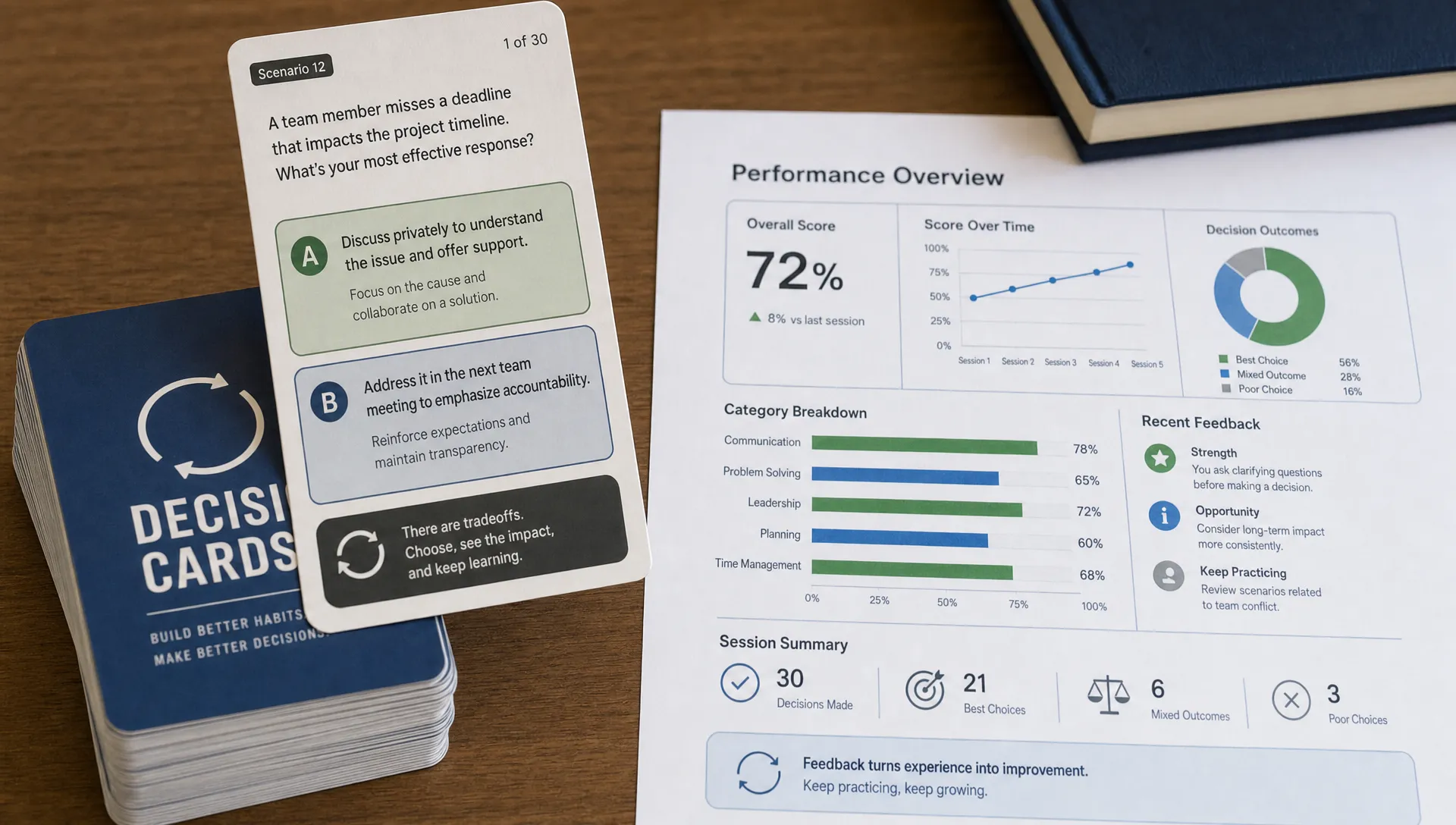
Dashboards are helpful only when teams know how to interpret tradeoffs. A spike in reach can hide weak relevance. A lower engagement rate can still be acceptable if the audience is more qualified. This is why practicing with realistic digital environments can matter. As StratX has discussed, online marketing platforms can sharpen strategic skills when learners must make decisions, interpret feedback, and adjust within constraints.
Account for search, AI discovery, and the social web
Social media no longer lives only inside platform feeds. Posts influence search behavior, creator content appears in search results, and buyers increasingly use AI tools to summarize options, compare brands, and ask for recommendations.
That means social media strategy should connect with broader discoverability. A strong post can become a proof point. A clear FAQ can become answer-ready content. Consistent positioning across social profiles, websites, reviews, and knowledge bases can make a brand easier for both people and AI systems to understand.
For brands that need to monitor how they appear in AI-generated answers, AI visibility platforms such as CapstonAI can help teams identify where their brand is mentioned, missed, or misrepresented across AI search experiences. That kind of visibility is becoming more relevant as prospects move between social platforms, search engines, and generative tools during the same decision journey.
The practical takeaway is simple: do not treat social as a disconnected channel. Treat it as part of a larger evidence system that shapes what customers, partners, media, and algorithms can understand about the brand.
Stress-test the strategy before the market does
A social media strategy that looks good in a slide deck may still fail under pressure. The best way to improve it is to test it against plausible scenarios.
Ask the team how the strategy would respond if organic reach dropped by 40 percent, a competitor copied the campaign theme, a negative customer story gained traction, a creator partnership underperformed, or a new platform format suddenly became dominant.
These scenarios reveal whether the strategy has real decision logic. If the team cannot explain what they would change, what they would protect, and how they would measure the next move, the strategy needs more work.
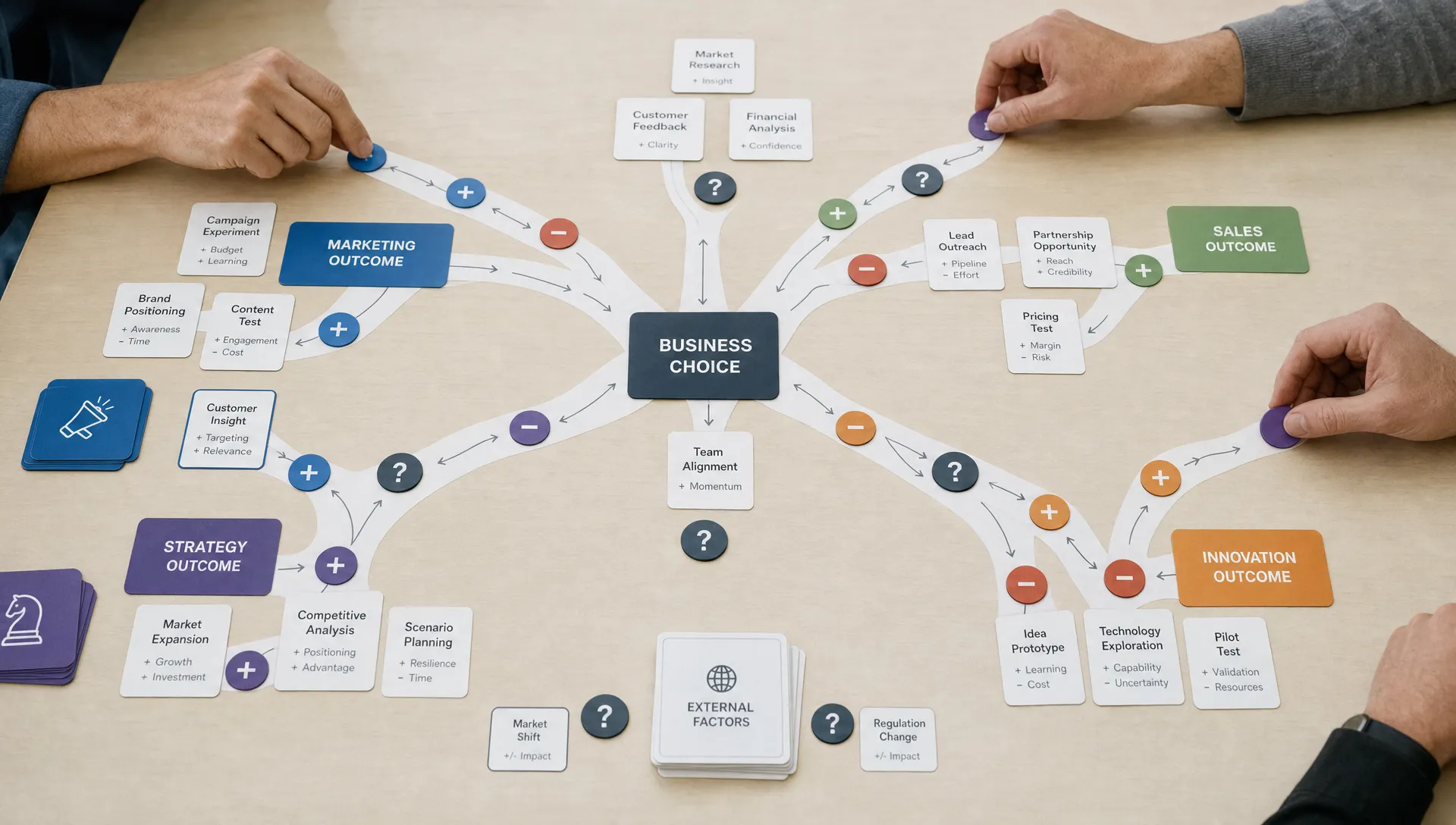
This is also where experiential learning is powerful. In a simulation or structured training exercise, learners can test decisions without risking brand reputation or budget. They can see how objectives, creative choices, spend, targeting, and competitive moves interact over time. StratX’s guidance on building a marketing campaign learners can test is a useful complement for educators and trainers who want to move from theory to applied judgment.
Common mistakes that make social strategies fragile
Even experienced teams can fall into patterns that weaken strategy. The most common mistakes are usually not technical. They are decision-making problems.
One mistake is starting with content volume instead of strategic focus. Publishing more does not fix unclear positioning or weak audience insight.
Another mistake is copying competitors without understanding their context. A tactic that works for a larger brand with stronger awareness may not work for a challenger brand that needs education and trust.
A third mistake is changing direction too quickly. Social media requires experimentation, but experiments need enough structure to generate learning. If every week brings a new objective, format, and audience, the team cannot know what caused the result.
Finally, many teams separate creative and measurement too much. Creative teams need performance insight, and analytics teams need to understand message strategy. When those groups learn together, the strategy becomes stronger.
A durable social media strategy checklist
Before finalizing your strategy, use this checklist to pressure-test it:
- Can the team explain the business role of social media in one sentence?
- Is the audience defined by behavior, needs, and decision context, not only demographics?
- Does the positioning guide what the brand should and should not say?
- Are channel choices based on audience behavior and team capability?
- Do content pillars connect customer needs to brand expertise?
- Is there a clear operating rhythm for planning, publishing, learning, and adjusting?
- Do metrics match the strategy’s purpose?
- Has the team tested how the strategy responds to disruption?
If the answer is yes, the strategy is more likely to hold up. If not, the problem is not that the team needs more posts. The team needs sharper strategic choices.
Frequently Asked Questions
What is a social media strategy? A social media strategy is a decision framework that defines how a brand will use social platforms to reach specific audiences, support business goals, create content, measure results, and learn over time.
How often should a social media strategy be updated? The core strategy should usually be reviewed quarterly, while tactical elements such as formats, posting cadence, and campaign tests may be adjusted weekly or monthly based on performance and market changes.
What makes a social media strategy different from a content calendar? A content calendar schedules what will be published. A social media strategy explains why that content should exist, who it is for, what it should achieve, how it will be measured, and how the team will adapt.
Which metrics matter most in social media strategy? The most useful metrics depend on the goal. Awareness strategies may track qualified reach and share of voice, while consideration strategies may track saves, comments, site visits, and lead quality. The key is to measure the behavior the strategy is designed to influence.
Turn strategy into practiced judgment
The strongest social media teams are not the ones that memorize every platform update. They are the ones that know how to make better decisions when conditions change.
For educators and corporate trainers, that is the real opportunity. Social media strategy becomes far more valuable when learners can practice tradeoffs, test assumptions, interpret results, and refine their approach in a realistic environment. StratX Simulations helps bring that experiential approach to marketing, strategy, sales, and innovation learning, so concepts do not just get discussed. They get applied.