Most teams do not underperform because they lack smart people. They underperform because smart people interpret the same problem differently, protect their own functional priorities or wait too long to challenge a weak assumption.
That is why serious games for business can be such a practical performance tool. They do not just make training more engaging. They create a realistic setting where teams must analyze information, make trade-offs, coordinate decisions and respond to feedback together. The game becomes a rehearsal space for the behaviors that drive performance back at work.
For L&D leaders, business educators and managers, the question is not whether people enjoy the activity. The question is whether the experience changes how a team thinks, communicates and acts when the stakes are real.
What serious games for business actually train
Serious games for business are structured learning experiences that use game mechanics such as goals, roles, competition, collaboration, scoring and feedback to develop business capabilities. The purpose is not entertainment, even if the experience feels energizing. The purpose is practice.
A simple quiz with points may improve recall, but a serious game asks a team to make choices together, commit to a strategy and deal with consequences. A business simulation is often the strongest format because it mirrors enough of a market, customer environment or organizational challenge to create meaningful pressure.
In that setting, learners are not passively receiving concepts. They are applying them. They might allocate resources, interpret market data, defend a strategy, negotiate priorities or adjust a plan after seeing results. This is where team performance starts to shift, because the group has to turn individual knowledge into collective action.
For a broader look at the learning science behind this approach, StratX has covered how serious games improve business learning outcomes by making abstract ideas more concrete and feedback more immediate.
The team performance problem they solve
Team performance usually breaks down in the space between knowing and doing. A group may understand strategy in theory, yet still struggle to align around priorities. Sales and marketing may agree on growth goals, yet disagree on which customers matter most. A product team may recognize the need for focus, yet continue adding features because no one wants to say no.
Traditional training can explain these issues, but explanation alone rarely changes habits. Teams need to practice the moments where performance is won or lost: choosing under uncertainty, challenging assumptions, listening across functions and adapting when new evidence appears.
Serious games create those moments on purpose. They compress time, make trade-offs visible and give teams a safe way to experience the consequences of their decisions. When done well, the game surfaces patterns that ordinary meetings often hide.
How serious games improve team performance
They create a shared business language
High-performing teams do not just work hard. They understand the business in similar enough ways to coordinate without constant translation. Serious games help create that shared language because everyone is working with the same scenario, metrics, constraints and feedback.
In a simulation, a marketing decision may affect sales performance. A pricing move may influence profitability. An innovation bet may strain resources before it pays off. When learners see these relationships together, they develop a more connected view of the business.
That shared view matters long after the session ends. Instead of debating from isolated functional perspectives, teams can refer back to common concepts: customer segments, positioning, margin, capacity, competitive response or long-term brand impact. The vocabulary becomes a tool for faster alignment.
They improve communication under pressure
Many teams communicate well when the topic is low stakes. The real test comes when time is short, information is incomplete and opinions differ. Serious games recreate that pressure without exposing the organization to real financial or customer risk.
During a game, participants have to explain their reasoning, ask for missing information and make disagreement productive. The best teams learn to move beyond polite discussion into clear decision dialogue. They say what they believe, why they believe it and what evidence would change their mind.
This is especially valuable for cross-functional teams. A finance-oriented participant may focus on cost discipline, while a marketing-oriented participant argues for investment. A sales participant may bring customer urgency into the conversation. The simulation gives them a structured way to integrate those viewpoints rather than letting one dominate by default.
They make failure safe, visible and useful
In the workplace, failure can be expensive or politically risky. In a serious game, failure becomes data. A team can test a strategy, see the outcome and discuss what happened without blaming a real-world loss on a person or department.
That changes the quality of learning. People are more willing to voice a hypothesis, question a plan or admit uncertainty when the environment is designed for experimentation. Google’s Project Aristotle research on team effectiveness identified psychological safety as the most important dynamic in successful teams, meaning people need to feel safe taking interpersonal risks in the group. Serious games support that dynamic by making risk-taking part of the learning process rather than a personal gamble.
The point is not to remove accountability. It is to help teams practice accountability in a healthier way. Instead of asking who caused the bad result, the debrief can ask which assumption was wrong, which signal was ignored and what the team will do differently next round.
They reveal hidden team habits
A business game does more than test business knowledge. It reveals how a team actually behaves.
Some groups rush into action before aligning on strategy. Some overanalyze until the decision window closes. Some let the loudest voice set direction. Others split work efficiently but fail to integrate the pieces before committing. These patterns are hard to see in a slide-based workshop because the team is not under the same level of decision pressure.
In a serious game, behavior becomes observable. Facilitators, instructors and team members can see who speaks, who holds back, how assumptions are tested and how conflict is handled. That visibility gives the group a more accurate starting point for improvement.
| Team performance lever | What the serious game makes teams practice | What improvement can look like at work |
|---|---|---|
| Strategic alignment | Choosing priorities under constraints | Fewer circular debates and clearer trade-offs |
| Communication quality | Explaining assumptions and evidence | More direct conversations and better listening |
| Cross-functional coordination | Connecting decisions across roles | Smoother handoffs and fewer siloed decisions |
| Adaptability | Responding to new feedback | Faster course correction when conditions change |
| Decision discipline | Committing despite uncertainty | Less delay and more consistent execution |
| Psychological safety | Testing ideas without real-world damage | More willingness to challenge weak assumptions |
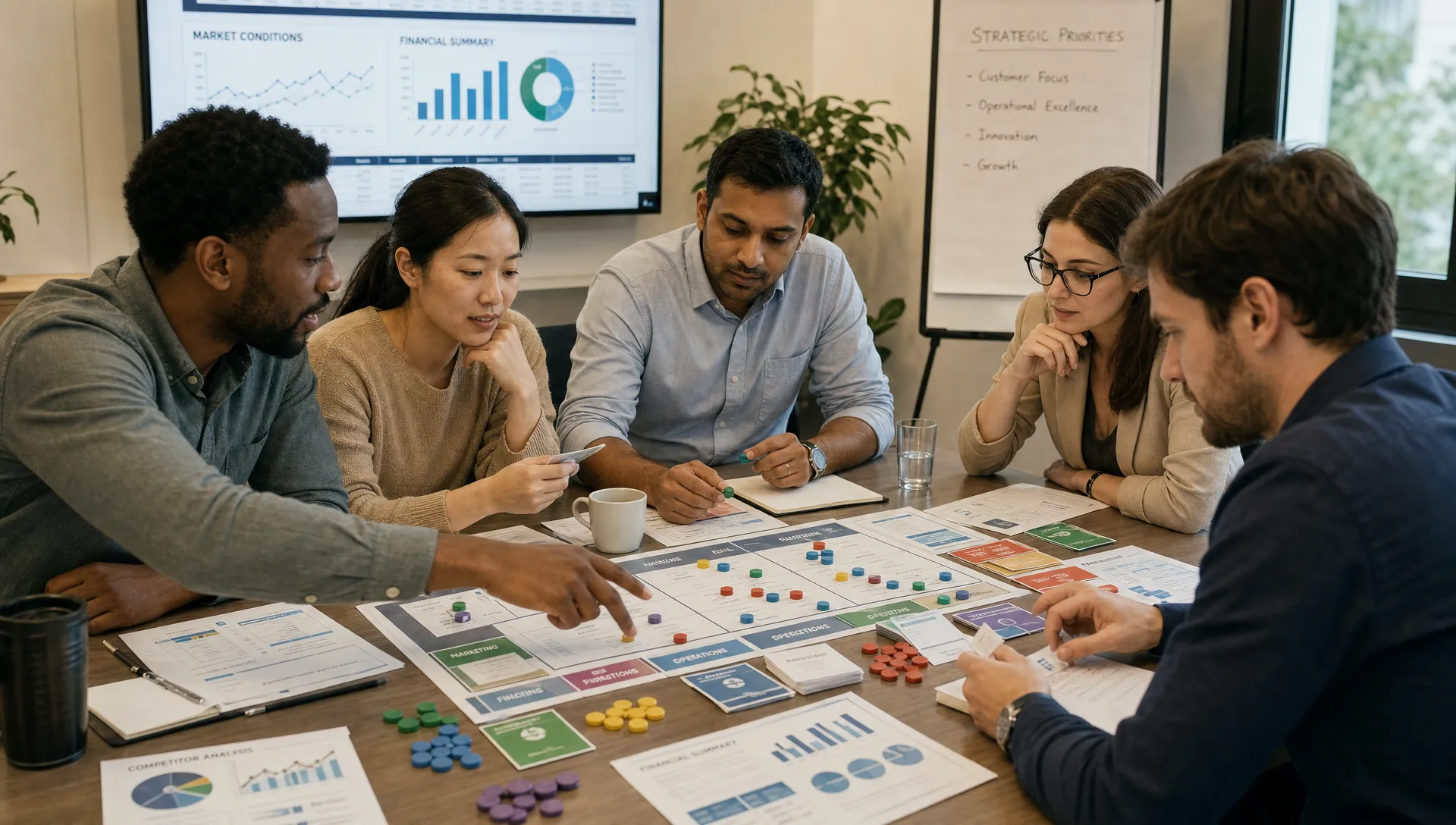
They strengthen systems thinking
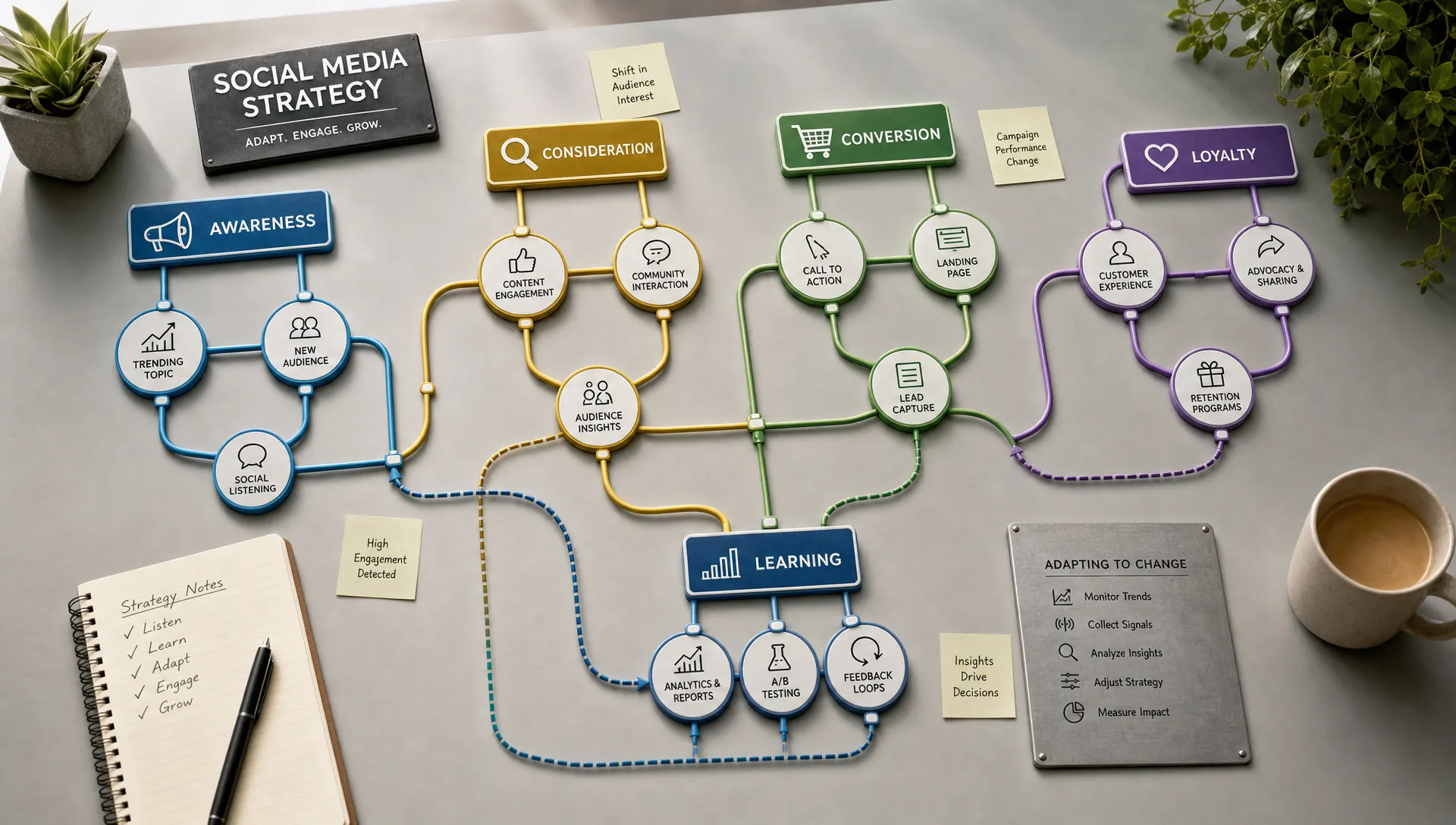
Team performance depends on understanding how one decision affects another. Serious games are effective because they make the business feel like a system rather than a list of separate functions.
A team might discover that an aggressive growth move increases short-term volume but weakens profitability. It might learn that a product decision changes sales conversations. It might see that a brand management choice affects customer perception over several rounds. These connections are difficult to absorb through explanation alone, but they become memorable when the team experiences them.
Systems thinking is especially useful for managers who need to lead beyond their own function. It helps them ask better questions before acting: What second-order effects could this create? Which team needs to be involved earlier? What metric are we optimizing and what might we be sacrificing?
They turn feedback into a team habit
In many organizations, feedback arrives too late. By the time a campaign, launch or strategic initiative shows results, the team has moved on or the causes are hard to isolate. Serious games shorten that loop.
Teams make decisions, receive feedback and adjust. This rhythm builds a performance habit: act, learn, refine and act again. Over several rounds, participants begin to see feedback less as judgment and more as a resource.
That habit matters because performance improvement is rarely a single breakthrough. It is the result of repeated adjustments. Serious games train teams to make those adjustments together.
What a strong serious game session should include
The design of the session matters as much as the game itself. A serious game improves team performance when it is connected to real work, facilitated with discipline and followed by a strong debrief.
A well-run session usually includes:
- A clear business challenge that matches the learners’ context
- Team roles that require interdependence rather than isolated work
- Decision rounds with time pressure and meaningful constraints
- Fast feedback that shows the consequences of team choices
- Reflection moments that connect game behavior to workplace behavior
- A transfer plan that turns insights into next actions
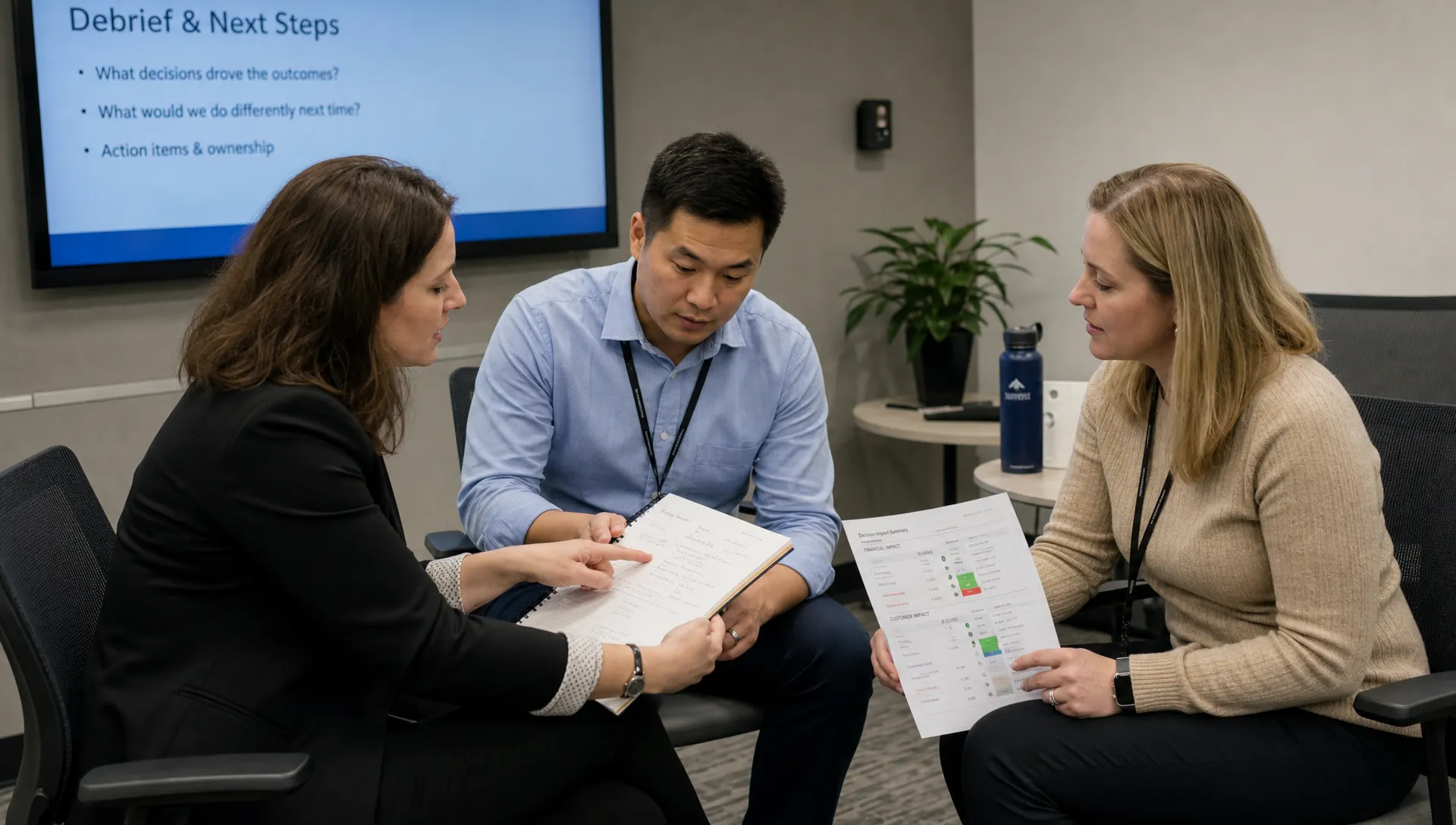
The debrief is where much of the performance value is captured. Facilitators should ask teams not only what result they achieved, but how they achieved it. Did they align before acting? Did they use evidence well? Did they invite dissent? Did they adapt or defend the original plan too long?
This is also where serious games move from memorable event to behavior change. StratX’s article on how business training simulations turn knowledge into action explores this bridge between learning and workplace application in more depth.
How to measure whether performance improved
Enjoyment scores are not enough. Participants may love a simulation and still return to old habits. To evaluate serious games for business properly, measure what teams do during the experience and what changes afterward.
A practical measurement plan can combine facilitator observation, participant reflection, manager feedback and business-relevant indicators. The goal is not to prove that one game session caused every later outcome. The goal is to track whether the team behaviors targeted in the training are becoming more consistent.
| What to measure | Evidence during the game | Evidence after the session |
|---|---|---|
| Alignment | The team states a clear strategy before deciding | Meetings end with clearer priorities and owners |
| Participation | More voices contribute to the decision | Team members report greater confidence speaking up |
| Decision quality | Choices are supported by data and assumptions | Plans include clearer rationale and risk checks |
| Adaptability | The team changes course when feedback shifts | Teams review results and adjust faster |
| Collaboration | Functions integrate their perspectives | Fewer handoff issues between departments |
| Execution discipline | The team commits to decisions on time | Follow-through improves on agreed actions |
For corporate programs, managers can reinforce the transfer by discussing the simulation language in regular work. For example, a leader might ask what assumptions the team is making, which trade-offs are being accepted or what feedback would trigger a change in plan. This keeps the learning alive after the session.
For academic programs, instructors can connect game behavior to course concepts, written reflections and team assignments. The simulation becomes both a learning experience and an assessment of applied thinking.
Choosing the right serious game for team performance
Not every game will improve team performance. The best choice depends on the skills you want teams to practice and the context in which they need to perform.
If the goal is strategic alignment, choose a game that forces market choices, resource allocation and competitive response. If the goal is sales performance, prioritize scenarios that require negotiation, customer understanding and value communication. If the goal is innovation, the game should include uncertainty, experimentation and portfolio trade-offs.
Look for experiences with enough realism to feel relevant but enough structure to keep learning focused. A game that is too simple may feel fun without changing behavior. A game that is too complex may overwhelm participants and distract from the performance objective.
Support also matters. Instructors and facilitators need clear materials, a strong debrief structure and confidence using the simulation. Online accessibility can also make it easier to include distributed teams or learners across locations.
Common mistakes to avoid
One common mistake is treating the game as the objective. The game is a vehicle. The real objective is better team behavior in business situations. If participants leave only remembering who won, the learning design was incomplete.
Another mistake is allowing competition to overpower reflection. Competition can increase energy, but it should not crowd out analysis. Teams need time to understand why a choice worked, why another failed and how their collaboration affected the result.
A third mistake is choosing a scenario that is disconnected from the team’s work. Serious games do not need to copy the workplace exactly, but the decisions should feel relevant enough that participants can transfer insights back to their roles.
Finally, many organizations underinvest in follow-up. A single session can create awareness and momentum, but performance improves when managers, instructors or facilitators reinforce the behaviors afterward.
Frequently Asked Questions
What are serious games for business? Serious games for business are structured learning experiences that use game mechanics and realistic scenarios to help people practice business skills such as strategy, decision-making, communication, sales, marketing and innovation.
How do serious games improve team performance? They improve team performance by giving groups a realistic environment to practice alignment, cross-functional coordination, feedback, decision-making and adaptation under pressure without the risk of real-world consequences.
Are serious games only useful for corporate training? No. They can be used in corporate learning, executive education and academic business programs. The key is choosing a simulation or game that matches the learners’ level, objectives and business context.
How long does it take to see performance benefits? Teams can often identify useful insights during a single session, especially around communication and decision habits. Lasting performance improvement depends on debrief quality, manager reinforcement and opportunities to apply the behaviors at work.
Build stronger teams through experiential learning
Serious games for business work because they make team performance visible, practical and repeatable. Instead of asking people to remember concepts, they ask teams to apply them together, learn from feedback and improve the way they make decisions.
If you are designing a corporate training program or business course, StratX Simulations offers experiential business simulation software that helps learners build real-world skills in marketing, strategy, sales and innovation through hands-on practice.