Students can recognize a viral video without being able to explain whether it helps a business. TikTok marketing gives instructors a useful setting for closing that gap: learners can test creative decisions, analyze customer behavior and connect attention to commercial outcomes.
The classroom objective is not to produce a viral hit. It is to make a defensible decision under uncertainty, then revise it when evidence changes. A low-view video that attracts qualified buyers can teach more than a popular clip with no measurable business purpose.
These five experiments work as offline workshops, instructor-managed pilots or extensions to a broader marketing simulation. Each includes a hypothesis, a controlled comparison and a debrief. None requires students to publish publicly, spend money or use personal accounts. The strongest submission explains both what the team learned and what its evidence cannot establish.
Design TikTok marketing experiments students can defend
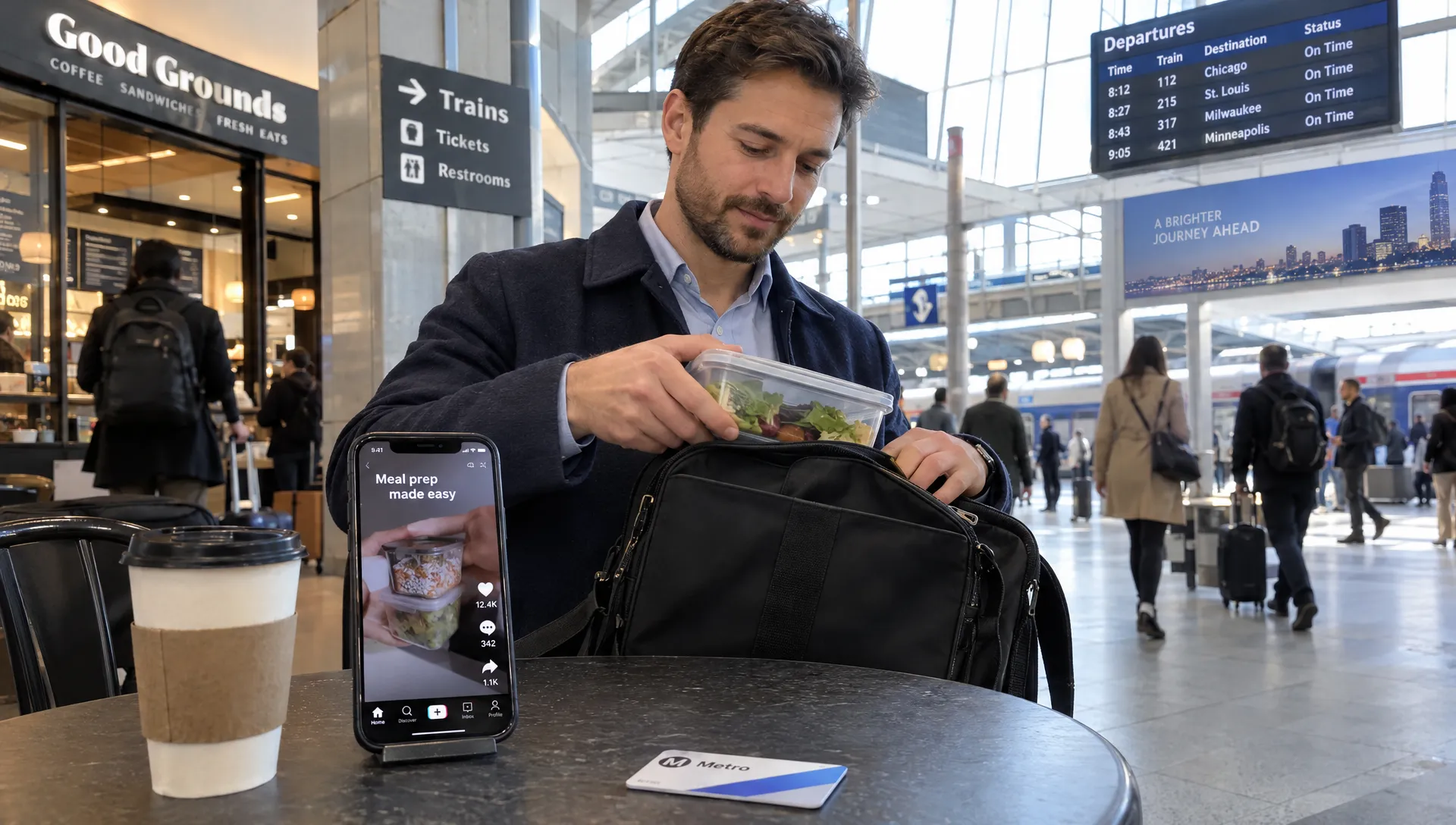
Start with one fictional business, such as a reusable lunch-container brand, and give every team the same product facts, contribution margin and target-market brief. Let students challenge whether the channel suits that business rather than assuming that every organization needs it.
Rotate creative, research and analysis roles across teams. Allow one class for offline tests and additional time for live pilots.
Ask teams to preregister a short test card:
- Decision: What would the business do differently after this test?
- Hypothesis: Which version should outperform, for whom and why?
- Variable: What changes, and what remains constant?
- Primary metric: Which outcome decides the result?
- Guardrail: What ethical, cost or brand limit must hold?
- Decision rule: What evidence supports scaling, revising or stopping?
Keep classroom proxies separate from platform measurements. A student's stated purchase intention is not a sale, and a timed video screening does not reproduce TikTok's recommendation system. Randomized classroom exposure supports a cleaner comparison than comparing two organic posts shown to different audiences.
For live work, confirm institutional approval, informed consent, data minimization and current platform access in your location. Never require public participation or collect identifiable viewer data unnecessarily. This structure builds on experiential approaches to teaching digital marketing while making assessment independent of account popularity.
Experiment 1: Test the opening, not the entire video
Begin TikTok marketing with a narrow creative question: does a problem-led opening hold attention better than a product-led opening? For the lunch-container brand, compare “Lunch leaked in your bag again?” with “Meet our reusable lunch container.”
Build two comparable openings
Ask teams to make two 15-second storyboards or rough videos. Keep the presenter, offer, length, demonstration, caption and call to action identical. Only the opening changes. If the music, price and pacing also change, students will not know what caused a difference.
Randomly assign classmates to see one version each, ideally without revealing the hypothesis. Use the same device conditions and show each participant only one opening before recording a response. Otherwise, familiarity with the first version can influence judgments about the second.
In offline TikTok marketing exercises, measure whether viewers can identify the problem and recall the product benefit after a fixed screening. Treat these as comprehension measures, not simulated platform retention.
Interpret the evidence
For a live pilot, compare watch-time or retention measures available in the account, using the same reporting window. Define each metric before the test because average watch time, completion rate and a classroom recall score answer different questions.
A hook can improve initial attention while attracting the wrong audience or disappointing viewers later. Ask students to inspect both the opening response and the video's promise. An exaggerated claim that wins attention should not pass the brand or accuracy guardrail.
The decision memo should name the next test, not declare a universal winning formula. If classmates preferred the problem-led version, the next step might be testing it with prospective customers. Two organic posts alone cannot isolate a hook effect because distribution, timing and audience composition may differ.
Experiment 2: Match the message to the audience
This TikTok marketing experiment tests segmentation rather than demographic stereotypes. Give teams two customer needs: commuters avoiding leaks and parents packing school lunches. The product stays the same, but the value proposition changes. Predict that each audience will favor its need-matched message.
Create a two-by-two comparison
Develop one message about protecting work essentials and another about making school-day packing easier. Show both messages to participants who actually match the respective need, assigning exposure randomly within each group. If recruiting relevant participants is impractical, provide fictional response data and label it clearly.
Keep the offer and product evidence constant. Change the benefit emphasis, use context and wording, not the product's capabilities. A lunch container cannot become childproof or guaranteed leakproof merely because that would strengthen a creative concept.
For TikTok marketing, choose one primary outcome, such as correct benefit recall or selection of the relevant product-information link. Ask an open-ended follow-up about why the message felt useful. That explanation can reveal a positioning problem that a preference score hides.
Look for a segment-specific response
The useful finding is an interaction: perhaps commuters respond more strongly to work protection while parents respond more strongly to packing convenience. A message that wins in both groups may simply communicate more clearly.
Do not treat a small convenience sample as proof of market demand. Record who participated, how they were recruited and which buyers were missing. Separate purchase authority from viewing interest, especially when the content may reach children.
Have teams recommend a target segment, a message and one reason the channel might be unsuitable. A local repair service, for example, may prioritize high-intent local search over entertainment-led discovery. Students can contrast their choices with Instagram marketing decisions without assuming the same creative works on both platforms.
Experiment 3: Test creator credibility against brand-led content
Students often assume a creator will make a brand more persuasive. Test the mechanism instead: is the effect coming from the messenger, the evidence or a better demonstration?
Separate the messenger from the proof
In TikTok marketing, compare two versions of the same honest product demonstration. One uses a brand representative; the other uses a fictional creator persona. Keep the script, claims, product shots and offer consistent. Use consenting volunteers or clearly labeled mock profiles, never impersonated real creators.
Creator fit should be evaluated against the customer problem. A meal-prep creator may have a plausible relationship with lunch storage; an unrelated celebrity may attract attention without making the recommendation useful. Students should explain that fit before seeing any responses.
Randomize viewers between versions and measure message recall, perceived credibility and the chosen business outcome. Preselect one primary metric rather than selecting whichever result favors the preferred creative. Follower count alone is not a measure of sales effectiveness.
Include disclosure and usage rights
For the classroom exercise, put a clear “Ad” disclosure in both versions so disclosure is not another uncontrolled variable. For real partnerships, follow the FTC's guidance on social media disclosures and applicable local rules. Payment, free products and other material connections can require disclosure.
Commercial TikTok marketing also requires permissions for the person's likeness, video footage, music and any reuse in advertising. Do not assume an audio track available to a personal account is cleared for commercial use. Check the applicable license and business-account options before publication.
The debrief should distinguish credibility from conversion. A creator-led video can seem more trustworthy yet generate no additional qualified action. Ask teams what extra contribution would cover the creator's fee, production time and usage rights, then compare that requirement with the evidence.

Experiment 4: Trace attention to a business outcome
A video with substantial reach can still fail commercially. Test the hypothesis that a message-matched landing page converts better than a generic product page. Randomly assign destination visitors between pages, keeping price, offer, checkout and the video constant. Trace exposure, destination visit, qualified action and purchase.
Build a measurable path
Use separate tagged destination URLs for each creative where the format permits them. Record a UTM source, medium, campaign and creative identifier, then check that analytics captures the intended events. In an offline exercise, give teams anonymized event records rather than collecting classmates' personal data.
Define a qualified action before students see results. A newsletter signup, product inquiry and purchase have different values. Deduplicate repeated events and exclude test transactions. If tracking cannot be implemented reliably, the experiment should measure a narrower outcome rather than invent a conversion rate.
TikTok marketing attribution needs a declared rule. For example, count purchases completed within seven days of a tracked visit, using the same window for both variants. This is a classroom convention, not a claim about TikTok's current default attribution settings.
Distinguish attribution from causation
Suppose a fictional test produces 200 destination visits and eight purchases. The visit-to-purchase conversion rate is 4%. If acquisition spending totals $120, customer acquisition cost is $15 per purchase, assuming each purchase represents a new customer. These numbers are teaching inputs, not performance benchmarks.
A tracked purchase is not necessarily an incremental purchase. Existing customers might have bought anyway, while cross-device journeys or consent restrictions can leave events unobserved. A randomized holdout can help estimate incremental effects when feasible; small classroom pilots usually cannot support precise causal claims.
The TikTok marketing decision should state the attribution rule, tracking gaps and margin implications together. At $12 contribution per order before acquisition spending, an eight-order result generates $96, less than the $120 acquisition cost. Higher reach would not fix those unit economics by itself.
Experiment 5: Allocate the next dollar under constraints
Now combine creative quality with resource allocation. Give each team a hypothetical $400 follow-up budget and two previous test results. Require a recommendation that accounts for contribution, uncertainty and the cost of producing the next round.
Compare economics on a consistent basis
The fictional results below assume $20 contribution per order before marketing and $200 of total test spending per option, including production, rights and distribution. Every attributed order is treated as incremental solely to simplify this exercise, an assumption students must challenge.
| Approach | Test spending | Visits | Orders | Contribution before marketing | Contribution after marketing |
|---|---|---|---|---|---|
| Brand-led ads | $200 | 400 | 12 | $240 | $40 |
| Creator-led ads | $200 | 300 | 15 | $300 | $100 |
For TikTok marketing, these results favor further investigation of creator-led ads, not an automatic commitment of the whole budget. A smaller visitor pool could reflect different targeting or auction conditions, while higher order quality might not persist when spending rises.
Ask teams to propose a capped follow-up allocation, reserving budget to test whether creator-led ads still deliver more contribution at equal spend. Hold audience, offer and attribution rules constant. Specify the evidence needed for another increase and the loss limit that would stop the test.
Keep the option not to use TikTok
For a live paid pilot, check current availability of in-feed advertising, creator-authorized ad formats such as Spark Ads and commerce features in the relevant market. Do not assume TikTok Shop, checkout or ad-account access is available to every institution or region.
Compare TikTok marketing with the Google Business Profile, reviews and email options in this French-language guide to low-budget marketing for very small businesses. Have students defend which channel deserves resources first, considering purchase intent, existing customers and staff capacity.
The strongest recommendation may be to delay paid activity, improve the offer or choose another channel. Require teams to identify the evidence that would change that decision. The lesson is opportunity cost, not loyalty to a platform.
Grade the quality of the decision
Do not award the highest mark to the team with the most views. Organic distribution, prior audience size and chance can overwhelm differences in student effort. Grade the chain from hypothesis to decision so an honest inconclusive result can earn a strong score.
A practical rubric assigns 25% to experimental design, 25% to measurement and calculations, 25% to commercial reasoning and 25% to ethical execution and reflection. Publish it before the assignment. Teams should submit their test card, creative materials, anonymized evidence and a one-page recommendation.
Ask each team to explain one confound, one alternative interpretation and the next experiment it would fund. When comparing groups, distinguish random assignment of viewers from random sampling of a market. The former helps test a treatment difference; the latter affects whether findings generalize.
In a TikTok marketing portfolio, retain unsuccessful tests as well as winners. A rejected hypothesis can show better reasoning than a favorable result that rests on changing several variables at once. Have students annotate what they changed after feedback so improvement is visible.
Close with a short transfer exercise: ask how the same test design would apply to another channel or product category. That checks whether students learned a reusable marketing method rather than a platform trick.
Frequently asked questions
Do students need a TikTok account? No. Storyboards, randomized classroom screenings and fictional analytics datasets support all five experiments. Public posting should be optional and subject to institutional policy, consent and local platform availability.
What is the three-second rule? It is a creative heuristic: communicate relevance quickly. It is not a guaranteed algorithm rule or a universal performance threshold. Students should test openings against their audience and objective instead of treating three seconds as a formula.
Can views show whether a campaign worked? Only when reach or awareness is the stated objective, and even then views do not establish comprehension or brand lift. Commercial evaluation also needs qualified actions, conversion economics and a clear account of attribution limits.
Can these activities be used with a business simulation? Yes. Use them as platform-specific workshops alongside broader decisions about segmentation, positioning and budget allocation. Keep the activity's classroom data separate from any simulation outputs, and verify the chosen software's actual capabilities.
Connect classroom experiments to broader marketing decisions
TikTok marketing becomes more educational when students must connect creative choices to customers, costs and evidence. Use one experiment to practice a single decision, then combine the findings in a wider strategy exercise.
StratX Simulations provides experiential business simulation software for marketing, strategy, sales and innovation, with academic and corporate formats. Explore its simulations to find a fit for your course objectives, then use these workshops to deepen students' decision-making practice.