
OUR 2026 INSTRUCTOR SURVEY
AI in the Business Simulation Classroom
What professors are seeing — and how they are responding.
We surveyed 31 instructors who use Markstrat, BrandPRO and other StratX business simulations to explore AI's role in their classrooms.

61%
Observe AI use
55%
Data analysis
58%
Report challenges
WHY WE CONDUCTED THIS SURVEY
A closer look at AI in experiential learning
AI is changing how students access information, analyze data and approach strategic decisions. But what does that mean when students are learning through business simulations?
To explore this question, we surveyed 31 instructors who use our business simulations to better understand how AI is being used in the classroom, where it adds value and what challenges it presents for educators.
Their responses raise an important question: how can we ensure students continue to develop their own strategic thinking and decision-making skills?
WHY THIS MATTERS
Learning through decisions, not just answers
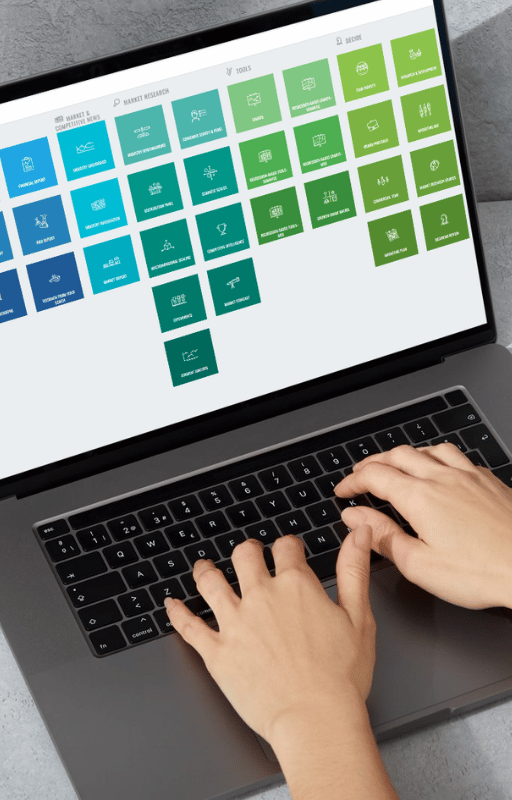
Our business simulations ask students to interpret market information, develop strategies, make decisions and learn from the consequences.
AI introduces another source of analysis and recommendations. An important question is how to ensure students remain responsible for their strategic reasoning.
WHAT WE FOUND
Three key findings from our survey
A snapshot of how AI is entering the simulation classroom.
01 / AI ADOPTION
AI is already visible in simulation classrooms
61%
19 of 31 instructors
Of the instructors we surveyed, 61% reported observing students use AI often or sometimes while working with our simulations.
Percentages rounded.
02 / HOW AI IS USED
AI is entering the decision-making process
We asked instructors how they believe students use AI during simulations.
Analyzing simulation data 55%
Developing or checking decisions 48%
Writing assignments 26%
Preparing presentations 23%
What stood out to us: Instructors are seeing AI used to interpret information and support strategic decisions, not simply to produce written assignments.
Multiple selections permitted · n=31
03 / TEACHING CHALLENGES
AI is creating challenges — but not for everyone
We found that instructors have different experiences with teaching and assessment in an AI-enabled classroom.
58%
Some or minor challenges
39%
None or not yet
3%
Not sure
18 instructors reported some or minor challenges, while 12 reported none or had not encountered them yet.

THE BIGGER QUESTION
What happens when AI becomes part of the team?
AI can help students explore alternatives and work through complex information.
But we believe the educational value of a simulation lies in understanding the market, weighing trade-offs, making decisions and learning from the consequences.
WHAT WE TAKE AWAY
The challenge isn't simply using AI. It's learning to question it.
We want students not only to reach good decisions, but to understand why they made them — and when another strategy might be more appropriate.
WHAT PROFESSORS SHARED WITH US
Four themes emerging from the classroom
Beyond the numbers, we identified four themes in instructors' responses.
01
Independent judgment matters
Some instructors expressed concern that students may rely too heavily on AI recommendations rather than developing their own understanding.
02
AI can support analysis
Others highlighted how AI can help students interpret data, organize information, clarify concepts and check calculations.
03
Assessment needs to go deeper
Instructors mentioned presentations, oral questioning, reflection and team discussions to better understand students' reasoning.
04
Clear expectations are important
We saw different approaches to AI use, with transparency and accountability recurring as important considerations.
RETHINKING ASSESSMENT
Evaluate the thinking, not just the outcome
We believe simulation performance remains valuable, but it doesn't tell the whole story.
Asking students to defend their strategy, explain assumptions and reflect on results can help educators assess what students have learned.

OUR PRACTICAL TAKEAWAYS
Five ways to keep strategic thinking at the center
Based on our survey, here are five considerations for educators using business simulations.
Set clear expectations for AI use
Define when and how AI can be used during the simulation.
Ask students to explain their decisions
Make strategic reasoning part of the learning process.
Encourage students to challenge AI outputs
Evaluate recommendations against market evidence.
Assess understanding as well as results
Use reflection, discussion, presentations or oral assessments.
Promote transparency
Encourage students to explain how AI influenced their analysis.
These suggestions are informed by survey themes; their effectiveness was not independently tested.

LOOKING AHEAD
A new opportunity for experiential learning
We see an opportunity to create learning experiences in which students can benefit from AI while remaining accountable for their judgment, decisions and understanding. Our goal is to strengthen strategic thinking, not replace it.
ABOUT OUR SURVEY
Who did we survey?
We surveyed 31 instructors who use our business simulations across undergraduate, master's/MBA and executive education programs.
Respondent profile
Teaching levels: 24 master's/MBA, 16 undergraduate and 5 executive education.
Simulations: 22 Markstrat users, 5 BrandPRO users, plus respondents using Digital Markstrat, MixPRO, Digital MediaPRO, BOSS and Circular Markstrat.
Multiple selections permitted.
Methodology and limitations
We collected responses from 31 instructors using StratX business simulations in 2026. Our findings reflect their observations and experiences; we did not independently measure student AI use, learning outcomes or AI-assisted performance. Because the sample is small and self-selected, with a substantial proportion of Markstrat users, the results should not be considered representative of all business educators. Percentages use all 31 respondents as the denominator and are rounded to the nearest whole percentage point.
CONTINUE THE CONVERSATION
What does effective learning look like in the age of AI?
At StratX, we're committed to helping educators develop students' strategic thinking and decision-making skills through experiential learning.
Explore Our Business SimulationsStratX Simulations · Our 2026 Instructor Survey